Why do I have to book my gorilla permits in advance?
Gorilla permits should be booked in advance because only a limited number of visitors are allowed to trek habituated mountain gorilla families each day. Once the permits allocated to a particular trekking destination and date have been reserved, additional travelers cannot simply turn up and join the trek. Booking early therefore helps secure your preferred trekking date and gives you enough time to coordinate accommodation, transportation and the rest of your gorilla safari itinerary.
What is a Gorilla Trekking Permit?
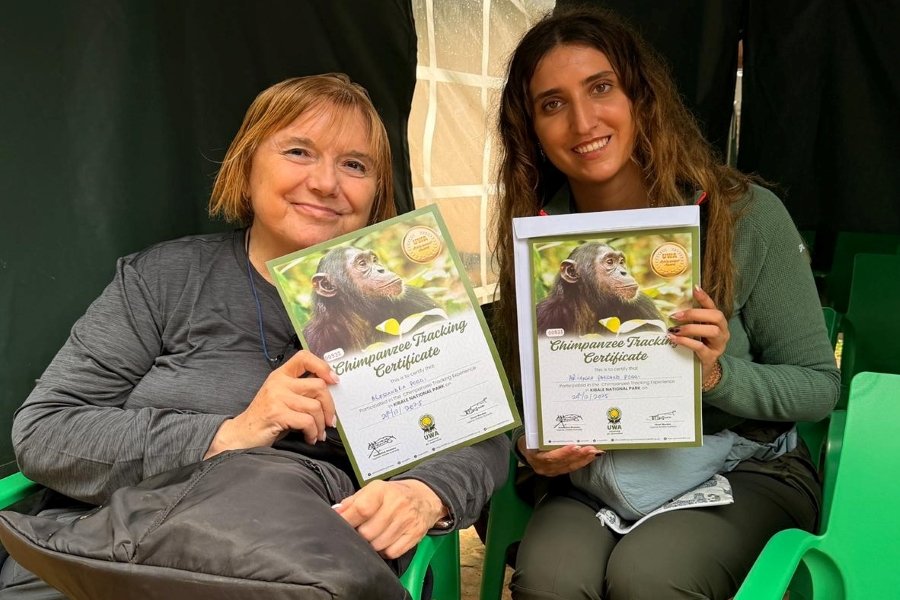
A gorilla trekking permit is an official authorization that allows a traveler to visit a habituated mountain gorilla family in its natural habitat as part of a regulated gorilla trekking experience. It is issued or controlled by the wildlife authority responsible for the destination and is required before a visitor can participate in an official gorilla trek.
In Uganda, gorilla trekking takes place in Bwindi Impenetrable National Park and Mgahinga Gorilla National Park. In Rwanda, trekking takes place in Volcanoes National Park.
The permit is important because gorilla tourism is deliberately restricted. Mountain gorillas are a protected species, and only a controlled number of visitors can visit habituated gorilla groups each day. Limiting visitor numbers helps reduce disturbance to the gorillas while allowing tourism to contribute to conservation and management of their habitat.
A gorilla permit is normally tied to a specific trekking date and destination, so it should not be viewed simply as an entrance ticket that can be used whenever you arrive. Your confirmed permit becomes one of the key elements around which your gorilla safari is organized, including accommodation, transfers and the rest of your itinerary.
It is also important to distinguish a gorilla trekking permit from ordinary national park entry. Entering a gorilla trekking destination does not automatically give you the right to join a gorilla trek. Travelers participating in the regulated trekking activity need the appropriate gorilla permit.
On the trekking day, visitors normally attend a briefing before being assigned to a trekking group and heading into the forest with authorized guides and trackers. Once the allocated gorilla family is located, the encounter is conducted according to the applicable wildlife authority’s rules, including restrictions intended to protect both visitors and gorillas.
This limited daily availability is one of the main reasons travelers are advised to book gorilla permits in advance. Securing the permit first helps confirm that gorilla trekking is actually available on your intended date before the rest of the safari is finalized.
Why are gorilla trekking permits limited?
Gorilla trekking permits are limited primarily to protect wild gorillas and their habitat while keeping tourism controlled and sustainable. A gorilla permit is therefore more than a way of collecting park fees; the permit system regulates how many tourists can visit habituated gorilla families on any given day.
Protecting Gorillas From Too Much Human Contact
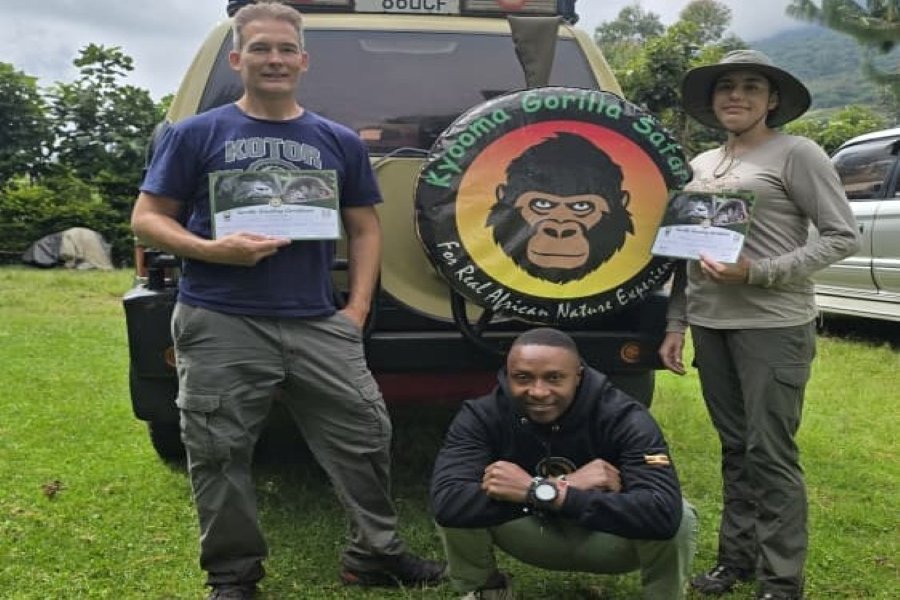
Mountain gorillas live in small social groups and, despite being habituated to the presence of researchers, guides and tourists, they remain wild animals. Habituation does not mean that unlimited numbers of people can approach them.
By restricting the number of permits available each day, wildlife authorities can control how many visitors enter gorilla habitat and how many people approach an individual habituated gorilla family. This reduces repeated disturbance and helps keep encounters predictable and manageable.
Reducing the Risk of Disease Transmission
Gorillas are genetically close to humans and can be susceptible to some human illnesses. Managing the number of people who come into close proximity to them is therefore an important part of responsible gorilla tourism.
Visitor rules concerning health, appropriate viewing distances and behavior around the gorillas work alongside permit limits. Together, these measures reduce unnecessary human contact and help protect gorilla populations.
Only Habituated Gorilla Families Are Visited by Tourists
Not every gorilla family living in Bwindi Impenetrable National Park, Mgahinga Gorilla National Park or Volcanoes National Park is available for tourism.
Tourist trekking generally focuses on habituated gorilla family groups that have undergone a carefully managed process of becoming accustomed to the controlled presence of humans.
Because there are only a certain number of gorilla families available for tourism, there is naturally a limit to how many trekking places can be offered each day.
Controlling the Number of Visitors per Gorilla Family
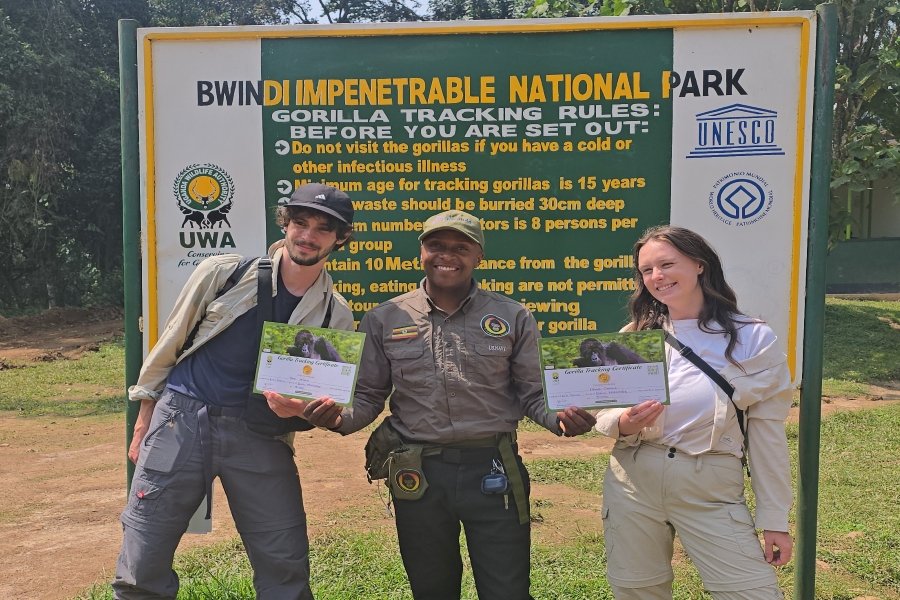
Wildlife authorities also regulate the size of tourist groups visiting individual gorilla families. Instead of allowing increasingly large groups whenever demand rises, authorities maintain controlled group sizes.
This means demand cannot simply be met by selling unlimited additional permits. Once the available trekking spaces for the habituated groups on a particular date have been allocated, permits can become unavailable for that date.
This is particularly important during popular travel periods when many international visitors may be trying to secure permits for the same weeks or months.
Protecting the Gorillas’ Natural Behavior
Gorilla trekking is designed to allow people to observe gorillas behaving naturally rather than turning their habitat into an environment dominated by tourists.
Too many visitors could increase noise, movement and pressure around a gorilla family. Controlled visitor numbers give the animals considerably more time without tourist groups nearby and help minimize disruption to activities such as feeding, resting, moving through the forest and interacting within their family groups.
Protecting Sensitive Gorilla Habitats
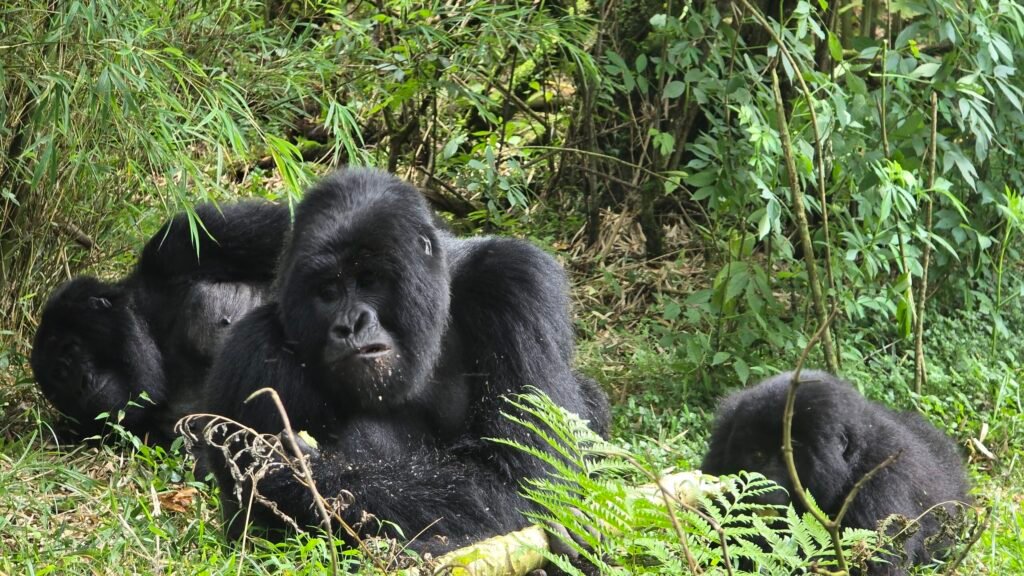
Permit restrictions also help manage pressure on the forests themselves. Gorilla trekking takes place in environmentally sensitive landscapes where repeated human movement can affect trails, vegetation and surrounding ecosystems.
Controlling daily visitor numbers makes tourism easier to manage while helping conservation authorities balance visitor access with protection of the wider habitat.
Maintaining a Manageable Trekking Experience
The limits also have a practical purpose. Gorilla trekking requires trained guides, trackers, park staff and coordinated trekking groups.
Visitors may spend several hours walking through forest and mountainous terrain before finding their assigned gorilla family. Unlimited visitor numbers would make this operation much harder to manage safely and responsibly.
A controlled permit system allows park authorities to know approximately how many trekkers will participate each day and organize the necessary personnel accordingly.
Supporting Conservation Through Controlled Tourism
Gorilla tourism also generates revenue associated with conservation and protected-area management. The model is deliberately based on limited, regulated access rather than mass tourism.
The objective is not to maximize the number of people standing around a gorilla family each day. It is to make tourism economically valuable while maintaining restrictions intended to protect the wildlife that travelers have come to see.
Why Limited Permits Can Sell Out
The limited nature of gorilla permits explains why availability can become one of the most important considerations when planning a gorilla safari.
There may be many travelers interested in trekking on a particular date, but the number of spaces cannot simply be expanded to match demand. Once the permitted spaces associated with the available habituated gorilla groups have been reserved, additional travelers may need to choose another date or, depending on their itinerary, consider another trekking location.
For travelers visiting Bwindi, availability can also affect which part of the park their safari should be based around. Accommodation and road-transfer arrangements should therefore be coordinated with the confirmed trekking arrangements rather than chosen independently.
Why This Makes Advance Gorilla Permit Booking Important
The conservation restrictions that make gorilla trekking special are also the reason gorilla permits should be booked in advance.
If you have fixed travel dates, are traveling during a popular period, are visiting as a family or group, or need your gorilla trek to fit into a tightly scheduled East African safari, securing permits early gives you a better chance of obtaining suitable trekking dates.
Rather than booking flights, accommodation and transfers and assuming a gorilla trek will be available, it is generally better to check permit availability early and build the gorilla safari around the confirmed trekking date.
In short, gorilla trekking permits are limited because gorilla conservation takes priority over visitor volume. Restricting daily access helps manage human contact, reduce disturbance, protect sensitive forest habitat, regulate visits to habituated gorilla families and maintain a controlled form of wildlife tourism. This limited availability is precisely why travelers planning a gorilla safari in Uganda or Rwanda are encouraged to secure their permits well before their intended trekking date.
How Does the Gorilla Permit System Work?
The gorilla permit system is a controlled reservation system that determines who is allowed to participate in gorilla trekking on a particular date. Rather than allowing unlimited visitors to arrive at a national park and trek gorillas, the responsible wildlife authority makes a limited number of permits available according to the habituated gorilla groups open for tourism and the visitor limits applied to those groups.
For a traveler, the process is relatively straightforward: you select your destination and intended trekking date, permit availability is checked, an available permit is reserved and paid for according to the applicable rules, and that confirmed trekking date then becomes one of the foundations of your gorilla safari itinerary.
The precise booking procedure differs between Uganda and Rwanda, so travelers should not assume that the same reservation rules apply in both countries.
The Wildlife Authority Controls Gorilla Trekking Permits
Gorilla permits are controlled through the official tourism and wildlife-management systems of the country where you intend to trek.
In Uganda, the Uganda Wildlife Authority (UWA) manages Bwindi Impenetrable National Park and Mgahinga Gorilla National Park. UWA states that it operates an automated system for managing gorilla and chimpanzee tracking permits. Its published guidelines also specify who may purchase different permit categories and how reservations are made.
In Rwanda, gorilla trekking takes place in Volcanoes National Park. Visit Rwanda states that gorilla permits can be booked directly online, while travelers can also arrange their trekking experience through tour operators as part of a wider itinerary.
You First Choose Where and When You Want to Trek
The permit system starts with your intended destination and trekking date.
For example, someone planning a Uganda safari may decide to trek in Bwindi, while another traveler might prefer Mgahinga. A visitor staying in Rwanda may choose Volcanoes National Park.
Your date is particularly important because permit availability is finite. You are not simply purchasing a generic ticket that guarantees gorilla trekking at any point during your holiday. Availability has to exist for the date associated with your planned trek.
This is why checking permits should happen relatively early in the safari-planning process.
Permit Availability Is Checked
Once you have possible trekking dates, availability can be checked through the appropriate booking system or, where applicable, through a licensed tour operator.
This is an important distinction:
Checking availability is not necessarily the same thing as having a confirmed permit.
A traveler should avoid treating an initial indication of availability as a completed reservation. The booking needs to be handled according to the wildlife authority’s current reservation and payment requirements.
In Uganda, UWA’s published July 2024 guidelines state that Foreign Non-Resident tracking permits must be purchased through a tour operator licensed by the Uganda Tourism Board. The guidelines contain separate provisions for Foreign Residents and East African Community citizens.
This is one reason travelers should always check the current official rules for their residency category rather than relying on an old blog post describing how permits used to be purchased.
The Number of Permits Is Connected to Habituated Gorilla Groups
The permit system exists partly because tourism cannot simply expand according to visitor demand.
Only designated habituated gorilla families are visited by tourists, and authorities limit the number of visitors who can approach those families.
Rwanda provides a particularly clear example. Visit Rwanda states that eight tracking permits are issued per tourist gorilla troop per day, with tourist encounters limited to a maximum of one hour.
Uganda likewise regulates trekking in Bwindi and Mgahinga rather than allowing unrestricted access to mountain gorillas. UWA describes gorilla trekking as taking place in these two protected areas and notes that the standard trekking experience provides one hour of observation with a habituated gorilla family.
This explains why a date can become unavailable even though there are still gorillas living within the national park. The permit inventory concerns regulated tourist access to habituated groups, not simply the total number of gorillas in the forest.
Payment Secures the Trekking Arrangement
After suitable availability has been identified, the permit has to be purchased according to the applicable booking conditions.
Once confirmed, the permit becomes a critical part of your safari arrangements. Your accommodation, road transfers and other activities should ideally be coordinated around the confirmed trekking date.
This is especially important in Uganda.
Bwindi is not a single entrance point where every traveler starts the same trek. UWA identifies four main trekking sectors in Bwindi: Buhoma, Ruhija, Rushaga and Nkuringo.
Where you are trekking can therefore affect where you should stay and how your road transfers are organized. Booking accommodation without considering your trekking arrangements can create unnecessary logistical problems.
Your Permit Does Not Mean You Choose a Specific Gorilla Yourself
Another important aspect of the system is the difference between securing permission to trek and being allocated a particular gorilla family.
For example, Visit Rwanda states that visitors gather at the Volcanoes National Park headquarters in Kinigi, where they are allocated a gorilla family on the trekking day according to considerations including fitness levels. Visitors also receive a briefing about trekking protocols before setting out.
Travelers therefore should not think of a permit as purchasing a private appointment with a particular silverback or gorilla family.
The permit gives you access to the regulated trekking experience under the applicable arrangements of the park.
What Happens on the Trekking Day?
On your confirmed trekking date, you report to the designated meeting or briefing point according to the instructions for your destination.
Visitors are briefed before entering the forest. The briefing typically covers how the trek operates and how visitors should behave around the gorillas.
You then trek with the authorized guiding team in search of the gorilla group assigned to you.
The amount of time spent hiking can vary considerably because the gorillas are wild animals moving through their natural habitat. In Uganda, UWA says a trek may last approximately two to seven hours, while the encounter with a habituated family is one hour under the standard tracking experience.
The permit therefore does not guarantee that the gorillas will be a particular walking distance from the trailhead. It authorizes participation in the managed trekking activity.
Why Can’t Authorities Just Sell More Permits When They Sell Out?
This is one of the most important things to understand about the entire system.
A gorilla permit is not comparable to an attraction that can simply increase capacity by adding another bus or opening another entrance.
Visitor numbers are intentionally restricted.
If the authorized trekking spaces for a particular date have been allocated, wildlife authorities cannot simply keep selling permits indefinitely to accommodate additional demand. The limits are part of the conservation model.
This is precisely why advance booking matters.
How the System Works When Booking Through a Tour Operator
When a gorilla safari is organized through a tour operator, the permit process can be incorporated into the wider safari reservation.
In practical terms, the planning sequence usually looks like this:
Choose travel dates → identify your preferred gorilla destination → check permit availability → secure the appropriate permit → confirm suitable accommodation → arrange transportation → finalize the rest of the safari.
This approach can be particularly useful for travelers combining gorilla trekking with a longer Uganda safari or those traveling from Kigali to Bwindi or Mgahinga.
Instead of treating the permit, hotel and transportation as three unrelated bookings, they can be planned as parts of the same itinerary.
How the Uganda Gorilla Permit System Works
For Uganda, you first need to decide whether your trek will take place in Bwindi or Mgahinga and identify suitable travel dates.
Permit availability is then checked and the reservation handled according to UWA’s current rules and your applicable visitor category. UWA’s published guidelines state that its automated system manages permit sales and that Foreign Non-Resident permits are purchased through UTB-licensed tour operators.
For Bwindi in particular, the trekking sector should be considered when planning the rest of your safari because the park has the Buhoma, Ruhija, Rushaga and Nkuringo trekking areas.
Once your trekking arrangements are confirmed, accommodation and transportation can be organized accordingly.
How the Rwanda Gorilla Permit System Works
Rwanda’s system is somewhat different.
Visit Rwanda says travelers can book gorilla permits directly online, while trekking can also be arranged through tour operators as part of a Rwanda itinerary.
Visit Rwanda’s booking information provides access to its tourism-services booking platform.
On trekking day, visitors assemble at the Volcanoes National Park headquarters in Kinigi at 7 a.m. for allocation and briefing before proceeding to track their assigned gorilla group.
Why the Permit System Makes Advance Planning So Important
The entire system ultimately explains why travelers hear the advice “book your gorilla permit before you travel.”
There is limited daily capacity. Your preferred date can become unavailable, and the trekking arrangements can influence where you stay and how your safari is routed.
For someone planning a gorilla safari from Kigali, for example, the confirmed permit can determine whether the itinerary takes you toward Bwindi, Mgahinga or keeps the gorilla experience within Rwanda at Volcanoes National Park.
How Far in Advance Should I Book a Gorilla Permit?
It is generally advisable to book your gorilla permit several months before your intended trekking date, particularly if you have fixed travel dates or intend to travel during a popular tourism period. There is no single booking period that works for every traveler because permit availability depends on the destination, trekking date, season, group size and how flexible you are with your itinerary. However, planning approximately 3 to 6 months in advance can provide considerably more flexibility, while travelers planning for particularly popular periods may choose to secure their permits 6 to 12 months ahead.
The most important point is that you should not wait until you arrive in Uganda or Rwanda before thinking about your gorilla permit. Gorilla trekking operates under a controlled permit system with limited daily availability. Once the available permits for your preferred date have been reserved, you may have to change your trekking date or adjust your wider safari itinerary.
Booking early becomes especially important when gorilla trekking is the main reason for your journey. If you are traveling thousands of kilometers specifically to see mountain gorillas, securing the trekking arrangements before finalizing an inflexible itinerary can significantly reduce the risk of discovering that your preferred trekking date is unavailable.
Booking a Gorilla Permit 6 to 12 Months in Advance
Booking 6 to 12 months before your gorilla trek can be a sensible choice for travelers who know their dates well in advance, particularly those traveling during popular holiday periods or combining gorilla trekking with a carefully scheduled East African safari.
Early booking can also be valuable for couples, families and larger private groups that want to trek together. Finding one available permit at relatively short notice may sometimes be possible, but obtaining several permits for the same trekking date can be more difficult. The larger your group, the more useful advance planning becomes.
Travelers organizing honeymoons, photography trips, anniversary journeys or other trips tied to specific dates may also benefit from booking early because they usually have less flexibility to move their gorilla trek to another day.
The same principle applies if you have already identified particular accommodation or are building a safari involving several national parks. Confirming your gorilla trekking date early makes it easier to arrange the rest of the itinerary in a logical sequence.
Booking a Gorilla Permit 3 to 6 Months in Advance
For many travelers, 3 to 6 months ahead provides a practical planning window.
At this stage, there may be greater flexibility to coordinate the gorilla trek with accommodation, transportation and other safari activities than there would be with a last-minute booking. However, availability should always be checked rather than assumed.
This timeframe can work particularly well for travelers whose international flights and annual leave have already been determined but who still have some flexibility within their safari itinerary.
For example, if you will be in Uganda for ten days but can trek gorillas on one of several possible dates, your safari operator can check the available options and arrange the rest of your journey around the confirmed trekking date.
Can I Book a Gorilla Permit 1 to 3 Months in Advance?
Yes. It may be possible to obtain a gorilla permit one to three months before your intended trek, depending on availability.
However, flexibility becomes increasingly valuable as your travel date approaches.
You may discover that your first-choice date is unavailable while permits remain available a day earlier or later. In such circumstances, travelers who have not yet committed to non-refundable accommodation and transportation arrangements may find it easier to modify their itinerary.
This is why checking gorilla permit availability before finalizing every component of the safari is so useful.
If you are traveling to Bwindi, flexibility may also involve considering different trekking arrangements within the park rather than focusing exclusively on one preferred area.
Can I Book a Gorilla Permit a Few Weeks Before Trekking?
Booking only a few weeks before your intended gorilla trek is possible if permits are still available, but it should not be relied upon as the standard planning strategy.
Last-minute availability can occur for several reasons. Some dates may simply have lower demand, while changes to existing travel plans can occasionally affect availability. Nevertheless, the existence of occasional last-minute permits does not mean travelers should assume permits will always be available.
If you are planning at short notice, it is usually better to remain flexible about your exact trekking date and, where practical, your trekking destination.
Instead of deciding that you must trek on one specific day and then arranging everything else around that assumption, check what is actually available first.
Uganda vs Rwanda Gorilla Trekking
| Comparison | Uganda Gorilla Trekking | Rwanda Gorilla Trekking |
|---|---|---|
| Main Gorilla Trekking Destination | Bwindi Impenetrable National Park and Mgahinga Gorilla National Park | Volcanoes National Park |
| Gorilla Permit Cost | Generally more affordable, making Uganda popular with travelers seeking better value. | Generally more expensive and positioned as a premium gorilla trekking destination. |
| Accessibility | Longer road journey from Entebbe or Kampala, although travelers can also fly domestically or enter Bwindi from Kigali. | Very convenient from Kigali, with Volcanoes National Park reachable by road in roughly a few hours. |
| Trekking Terrain | Dense rainforest, steep hills and highly varied terrain, particularly in Bwindi. | Mountainous volcanic terrain with bamboo forest and generally more open vegetation in some trekking areas. |
| Gorilla Trekking Experience | Wild, immersive rainforest experience with several trekking sectors and route options. | Premium trekking experience with excellent tourism infrastructure and easy access from Kigali. |
| Gorilla Habituation Experience | Available in Uganda, allowing visitors significantly more time observing a gorilla family during the habituation process. | Standard gorilla trekking is the primary experience. |
| Best For Budget-Conscious Travelers | Excellent choice because of comparatively lower permit and safari costs. | Better suited to travelers comfortable with a higher overall safari budget. |
| Best For Luxury Travelers | Excellent luxury lodges are available around Bwindi and Mgahinga. | Outstanding choice for high-end and luxury gorilla trekking holidays. |
| Safari Combination Options | Easy to combine with Queen Elizabeth National Park, Kibale, Murchison Falls and other Uganda safari destinations. | Easy to combine with Kigali, Akagera National Park, Nyungwe National Park and other Rwanda attractions. |
| Number of Trekking Areas | Multiple trekking sectors, especially within Bwindi, providing greater itinerary flexibility. | Trekking is concentrated around Volcanoes National Park. |
| Scenery | Ancient tropical rainforest, mist-covered hills, valleys and dramatic mountain landscapes. | Volcanic peaks, bamboo forests and spectacular Virunga mountain scenery. |
| Ideal Trip Style | Adventure safaris, multi-day wildlife tours, budget, mid-range and luxury trips. | Short luxury trips, fly-in holidays, Kigali extensions and premium East African itineraries. |
| Overall Value | Best for travelers prioritizing affordability, variety and combining gorilla trekking with a longer wildlife safari. | Best for travelers prioritizing convenience, premium accommodation and easy access from Kigali. |
When Should You Reserve Your Gorilla Permit?
You should reserve your gorilla permit as soon as your travel dates are reasonably confirmed, particularly when gorilla trekking is one of the main reasons for your trip to Uganda or Rwanda. Because gorilla trekking permits are limited for each trekking day, waiting until the final weeks before your safari can reduce your choice of dates and make it more difficult to coordinate the trek with accommodation, transportation and other safari activities.
As a general planning guideline, many travelers should consider arranging their gorilla permits approximately 3 to 6 months in advance. If you intend to travel during a popular holiday period, have fixed travel dates, are organizing a honeymoon or are traveling with a group that requires several permits for the same day, planning 6 to 12 months ahead can provide greater flexibility. These timeframes are guidelines rather than guarantees because actual availability can vary from one date to another.
The best time to reserve your permit is therefore not determined solely by how many months remain before your safari. It also depends on how flexible your travel plans are.