Introduction to Rwanda Safaris
Rwanda Safaris offer one of Africa’s most distinctive combinations of mountain gorilla trekking, primate encounters, traditional wildlife viewing, spectacular scenery, cultural experiences and rainforest adventures. Famously known as the Land of a Thousand Hills, Rwanda is a compact yet remarkably diverse destination where travelers can move from the vibrant capital of Kigali to mist-covered volcanic mountains, ancient forests, wildlife-rich savannahs and peaceful lakeshores within a relatively short safari itinerary. For travelers looking for an African holiday that goes beyond conventional game viewing, a Rwanda safari provides an opportunity to experience wildlife and landscapes in dramatically different environments while discovering the history, culture and conservation efforts that have shaped modern Rwanda.
For many international travelers, the greatest attraction of Rwanda Safaris is the opportunity to encounter endangered mountain gorillas in their natural habitat. Gorilla trekking takes place in Volcanoes National Park in northwestern Rwanda, where forest-covered slopes form part of the greater Virunga landscape. Walking through the mountain forest in search of a habituated gorilla family is an experience very different from observing wildlife from a safari vehicle. The journey requires visitors to enter the gorillas’ environment on foot, accompanied by trained guides and trackers, before spending a controlled period observing these extraordinary primates. Their social interactions, physical power and often surprisingly gentle behavior have made gorilla trekking in Rwanda one of the country’s most sought-after wildlife experiences.
However, Rwanda is far more than a gorilla trekking destination. A carefully planned Rwanda safari tour can combine the mountain forests of Volcanoes National Park with the open savannahs, wetlands, lakes and woodlands of Akagera National Park. Akagera provides Rwanda’s classic game-viewing experience, allowing travelers to search for animals such as elephants, buffaloes, lions, giraffes, zebras, hippos, antelopes and numerous other species while exploring the park by safari vehicle. The contrast between trekking through a cool mountain forest one day and watching wildlife across open African landscapes a few days later demonstrates just how varied a Rwanda safari can be.
Travelers interested in primates can continue south or southwest toward Nyungwe National Park, one of Rwanda’s most important forest ecosystems. Nyungwe is particularly famous for chimpanzee trekking and its remarkable primate and bird diversity. Forest walks, hiking experiences and other nature-based activities make the area an excellent addition to longer Rwanda safari itineraries. Combining gorillas in Volcanoes National Park, savannah wildlife in Akagera and chimpanzees in Nyungwe creates a remarkably varied safari within one relatively small country.
Rwanda’s natural attractions are complemented by its striking landscapes. The country’s famous hills create dramatic scenery throughout many road journeys, while the Virunga volcanoes dominate parts of the northwestern horizon. Tea plantations, agricultural communities, forests, valleys and lakes continually change the scenery as travelers move between destinations. Lake Kivu, along Rwanda’s western frontier, provides another dimension to a safari holiday and can be incorporated as a relaxing stop between wildlife experiences or at the end of a longer journey.
Most Rwanda safari holidays begin in Kigali, which serves as the country’s principal international gateway and an important destination in its own right. Rather than immediately driving to a national park after arrival, travelers can spend time exploring Kigali’s historical, cultural and contemporary attractions. The city can provide valuable context for understanding Rwanda before continuing into the countryside. Its central position also makes it convenient for organizing journeys toward Volcanoes National Park, Akagera National Park, Nyungwe and other parts of the country.
Another major advantage of choosing Rwanda is the possibility of combining it with neighboring East African destinations. Travelers can integrate Rwanda gorilla safaris with gorilla trekking in Uganda, wildlife safaris in Kenya, or the Serengeti and other destinations in Tanzania. This makes Rwanda particularly attractive for international visitors who want to combine intimate primate encounters with the great savannah wildlife experiences for which East Africa is famous.
At Kyooma Gorilla Safaris, Rwanda safari journeys can be designed around the traveler’s available time, preferred accommodation category, wildlife interests and overall East African travel plans. Some visitors may primarily want a short Rwanda gorilla trekking safari from Kigali, while others may prefer a longer journey combining gorillas, chimpanzees, golden monkeys, Akagera wildlife, Lake Kivu and cultural experiences. Multi-country itineraries can also connect Rwanda with Uganda, Kenya, Tanzania or other regional destinations where practical.
Whether your priority is standing quietly within sight of a mountain gorilla family, tracking chimpanzees through a rainforest, watching elephants in Akagera, photographing Rwanda’s rolling landscapes or combining several experiences into one journey, Rwanda Safaris can offer an exceptionally diverse introduction to East Africa.
Why Choose Rwanda for an African Safari?
Choosing where to go on safari in Africa can be difficult because the continent offers an enormous variety of destinations and wildlife experiences. Rwanda distinguishes itself not by trying to reproduce every type of African safari, but by combining several highly contrasting experiences within a geographically compact destination. A traveler can explore mountain forests associated with gorillas and golden monkeys, dense rainforest inhabited by chimpanzees and other primates, and savannah ecosystems supporting large African mammals during the same holiday.
One of the strongest reasons to choose a Rwanda safari is the country’s reputation for mountain gorilla trekking. The mountain gorilla is among the world’s most remarkable primates, surviving naturally only within a limited part of Central and East Africa. Rwanda protects mountain gorillas within Volcanoes National Park, making the park a central destination for travelers interested in primate conservation and wildlife encounters.
Gorilla trekking differs fundamentally from a conventional game drive. Rather than remaining inside a vehicle and covering large distances in search of animals, visitors walk through the forest with guides and trackers. Conditions vary according to the location of the gorillas, weather and terrain, meaning every trek develops differently. Once a habituated gorilla family is located, visitors follow strict regulations governing their encounter. This carefully managed approach is designed to protect the gorillas while allowing tourism to contribute to their conservation.
Rwanda is also attractive because gorilla trekking can be combined with several other primate experiences. Golden monkey tracking in the Volcanoes region provides another opportunity to explore montane forest, while chimpanzee trekking in Nyungwe introduces visitors to a very different primate species and ecosystem. For travelers particularly interested in primates, a Rwanda gorilla and chimpanzee safari can therefore offer much greater depth than a journey centered on a single wildlife encounter.
Traditional African wildlife safaris are another important component of Rwanda’s tourism offering. Akagera National Park provides game drives through landscapes that differ dramatically from Rwanda’s mountain forests. Savannah, woodland, wetlands and lakes create habitats for a wide variety of animals and birds. Including Akagera allows visitors to experience both primate trekking and vehicle-based game viewing without leaving Rwanda.
The country’s relatively compact size can also make safari planning more manageable. Rwanda’s major tourism destinations are connected through a road network that allows itineraries to be structured around overland transfers, although journey times still need to be planned realistically. The changing countryside means these transfers are not simply movements between attractions; they are also opportunities to observe rural landscapes, settlements, agricultural areas and Rwanda’s famous hills.
For travelers with limited time, this geographical advantage can be particularly valuable. A short visit can concentrate on Kigali and Volcanoes National Park, while additional days make it possible to introduce Akagera, Nyungwe, Lake Kivu and other destinations. Travelers with more time can create comprehensive circuits or cross the border into Uganda as part of a combined East African itinerary.
Rwanda – The Land of a Thousand Hills
The expression Land of a Thousand Hills captures one of Rwanda’s defining characteristics. Hills, ridges, valleys and mountains dominate much of the landscape, creating scenery that distinguishes Rwanda from the extensive plains commonly associated with safari destinations elsewhere in East Africa.
Traveling through Rwanda reveals cultivated hillsides, villages, forests, tea-growing areas and valleys arranged across an undulating landscape. In the northwest, the scenery becomes increasingly dramatic as the Virunga volcanoes rise above the surrounding countryside. These mountains form the backdrop to some of Rwanda’s most famous wildlife experiences and help create the cool, moist environments associated with Volcanoes National Park.
The landscapes change again toward the east, where Akagera National Park introduces lower-lying savannahs, wetlands and lakes. This contrast is particularly important for safari travelers because it means a journey through Rwanda can feel like several different ecological experiences rather than a single repetitive landscape.
Western Rwanda introduces Lake Kivu and mountainous scenery along the country’s western frontier. Lake Kivu can provide a slower stage of the journey after demanding trekking activities, particularly for travelers building longer Rwanda safari holidays.
Southern and southwestern journeys toward Nyungwe reveal another side of the country, including extensive forest landscapes and tea-growing regions. The transition from populated countryside into dense rainforest emphasizes Rwanda’s ecological variety.
For photographers, the country’s topography can be especially rewarding. Mist around volcanic peaks, layers of distant hills, forest canopies, lakes and agricultural landscapes create opportunities for photography beyond wildlife alone. Sunrise, changing cloud patterns and evening light can dramatically transform the scenery.
Rwanda’s Combination of Gorillas, Primates and Savannah Wildlife
Perhaps the most compelling reason to consider Rwanda Safaris is the ability to combine three major categories of African wildlife experience: mountain gorillas, other primates and savannah mammals.
Volcanoes National Park represents the mountain component of the journey. Here, gorilla trekking is the principal attraction, supported by golden monkey tracking, hiking and other experiences depending on current park operations and traveler interests. The environment is characterized by volcanic terrain and montane vegetation, creating a safari experience based largely around walking rather than driving.
Nyungwe introduces a completely different forest ecosystem. Chimpanzees become one of the principal wildlife attractions, while the broader forest supports numerous primates, birds and plant species. Travelers who visit both Volcanoes and Nyungwe therefore gain a much broader appreciation of Rwanda’s primate diversity.
Akagera completes the contrast. Instead of entering dense forest on foot, visitors explore open habitats by safari vehicle and, where available, by boat. Large mammals, water-associated wildlife and extensive birdlife replace the close forest environment encountered elsewhere.
A well-designed itinerary can therefore move from watching mountain gorillas at relatively close range to searching for lions or elephants across the savannah and later listening for chimpanzees within a rainforest. Few destinations of Rwanda’s geographical size offer such contrasting wildlife experiences.
This diversity also means that Rwanda safari packages can be adapted to very different travelers. Wildlife enthusiasts can concentrate on national parks, photographers can design journeys around scenery and animal encounters, honeymooners can combine private safari arrangements with high-quality accommodation, and adventurous travelers can emphasize trekking and hiking.
For visitors planning their first journey to Africa, Rwanda can also be incorporated into a wider regional safari. Gorilla trekking can be followed by Uganda’s forests and national parks, Kenya’s wildlife areas or Tanzania’s famous northern safari circuit. Such combinations create journeys that bring together some of East Africa’s most distinctive wildlife experiences.
Ultimately, the strength of Rwanda Safaris lies in variety. Rwanda is not simply somewhere to visit gorillas and leave. It is a destination where mountain ecosystems, tropical forests, savannah wildlife, lakes, cultural encounters and modern urban experiences can be connected into one thoughtfully planned African journey.
Best Rwanda Safari Destinations
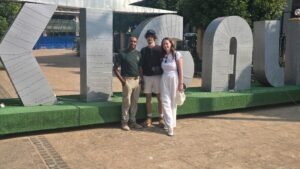
The quality of Rwanda Safaris comes largely from the remarkable diversity of destinations that can be combined within a single journey. Although Rwanda is geographically smaller than many of Africa’s famous safari countries, its protected areas contain dramatically different ecosystems. Travelers can trek through misty mountain forests in search of mountain gorillas, walk through ancient rainforest while tracking chimpanzees, explore open savannah looking for large African mammals, relax beside Lake Kivu and spend time discovering the history and culture of Kigali.
The major destinations on a Rwanda safari tour include Volcanoes National Park, Akagera National Park, Nyungwe National Park, Gishwati-Mukura National Park, Lake Kivu and Kigali. Each plays a different role in a Rwanda itinerary. Volcanoes National Park is the country’s premier mountain gorilla destination, Akagera provides the classic wildlife safari, Nyungwe specializes in chimpanzees and rainforest experiences, Gishwati-Mukura introduces another important forest ecosystem, Lake Kivu provides relaxation and beautiful scenery, while Kigali is both the main gateway and an important cultural destination.
Travelers do not necessarily need to visit every destination on their first Rwanda holiday. The right combination depends on available time, interests, budget and whether Rwanda is being visited independently or as part of a longer East African safari. A short Rwanda gorilla safari from Kigali, for example, may concentrate almost entirely on Volcanoes National Park, whereas a longer Rwanda safari can combine several national parks and Lake Kivu.
Volcanoes National Park – The Heart of Rwanda Gorilla Safaris
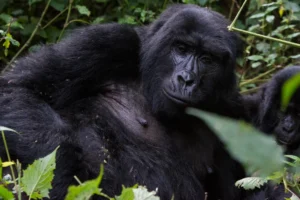
Volcanoes National Park is the destination most closely associated with Rwanda gorilla safaris and one of the country’s most internationally recognized protected areas. Situated in northwestern Rwanda, the park forms part of the wider Virunga conservation landscape, an extraordinary mountainous region extending across international borders and providing habitat for the endangered mountain gorilla.
The scenery surrounding Volcanoes National Park immediately distinguishes it from traditional savannah safari destinations. Volcanic mountains rise above cultivated countryside while thick vegetation covers sections of their slopes. Mist, cloud and changing mountain weather contribute to the dramatic character of the region. Instead of exploring broad plains by safari vehicle, visitors come primarily to enter the forest on foot.
Mountain gorilla trekking is the park’s signature experience. On a trekking morning, visitors generally report to the designated park briefing point, where preparations are made before groups depart toward the forest with authorized guides and trackers. The exact nature and duration of a trek can vary because gorillas move naturally through their habitat. Some groups may be encountered after a relatively manageable walk, while others can require considerably more effort across uneven, muddy or steep terrain.
The uncertainty is part of what makes mountain gorilla trekking in Rwanda so compelling. Visitors are not entering a controlled wildlife facility. They are walking into a living ecosystem and searching for wild primates whose movements cannot be scheduled around tourism.
When a habituated gorilla family is located, the experience changes from physical adventure to careful observation. Visitors follow established rules regarding behavior and proximity while guides help interpret what is happening within the group. Depending on the individuals encountered, travelers might observe adults feeding, juveniles playing, mothers caring for young gorillas or a silverback resting and monitoring the family.
The time spent with gorillas is carefully controlled under the applicable trekking regulations. These restrictions are important because mountain gorilla tourism operates within a conservation framework intended to limit disturbance while supporting protection of the species and its habitat.
For many travelers, the emotional impact of the encounter becomes one of the defining memories of their African journey. Photographs are valuable, but simply watching the gorillas’ movements, expressions and social interactions often becomes equally memorable.
Volcanoes National Park also offers more than mountain gorillas. Golden monkey tracking in Rwanda is another popular primate experience and can work particularly well for visitors spending additional nights in the region. Golden monkeys are energetic forest primates, making the experience quite different from observing a gorilla family.
Depending on current park access and operating conditions, other hiking and nature experiences may also be available in the broader Volcanoes area. Because access, trail conditions and specific activities can change, travelers should confirm the latest information when planning their safari rather than relying solely on older itineraries.
The communities and landscapes surrounding the park further enrich the experience. Travelers approaching the Volcanoes region pass through densely cultivated countryside with impressive views toward the volcanic chain when conditions are clear. Cultural experiences can also be incorporated into itineraries to provide greater understanding of life around the protected area.
Accommodation around Volcanoes National Park ranges across different comfort levels, making the region accessible to travelers planning luxury, mid-range and more budget-conscious Rwanda safari packages. The most suitable lodge depends on budget, location, services and the wider itinerary.
For travelers whose primary goal is gorilla trekking, Volcanoes National Park can form the centerpiece of a short 2-day or 3-day Rwanda gorilla safari. Those with more time can combine it with Lake Kivu, Akagera National Park, Nyungwe or cross-border destinations in Uganda.
Akagera National Park – Rwanda’s Classic Wildlife Safari Destination
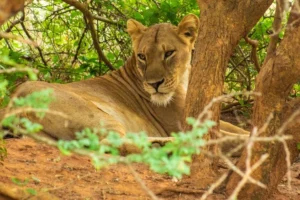
While Volcanoes National Park introduces travelers to Rwanda’s mountain forests, Akagera National Park reveals an entirely different side of the country. Located in eastern Rwanda, Akagera is the country’s principal destination for traditional vehicle-based wildlife viewing and an essential addition for travelers wanting to combine gorilla trekking with a classic African safari.
The landscape includes savannah, woodland, wetlands, lakes and other habitats, creating a varied environment for wildlife. Driving through Akagera can feel dramatically different from exploring the densely populated highlands elsewhere in Rwanda. Broad views and open landscapes create the kind of safari atmosphere many travelers associate with East Africa.
A Rwanda wildlife safari in Akagera generally revolves around game drives. These excursions allow visitors to explore different habitats while searching for large mammals and smaller wildlife. Depending on location, season, luck and animal movements, sightings may include elephants, buffaloes, giraffes, zebras, antelopes, hippos and predators such as lions.
Akagera is also associated with Rwanda’s Big Five safari offering following conservation and wildlife restoration efforts. For travelers who want both mountain gorillas and traditional African mammals, the combination of Volcanoes and Akagera is particularly attractive.
Wildlife encounters in Akagera should never be treated as guaranteed sightings. Animals move freely within the ecosystem, and the experience is based on searching, observing signs and interpreting the landscape. An experienced guide can help identify animal tracks, alarm calls, bird behavior and other clues that increase the richness of the safari even when a particular species remains difficult to locate.
Morning game drives can be particularly rewarding because temperatures are generally cooler and wildlife activity can be higher. Depending on the itinerary and current park arrangements, game-viewing schedules can be adapted to provide sufficient time for exploration rather than rushing through the park simply to complete a checklist of animals.
One of Akagera’s distinguishing characteristics is the importance of water. Lakes and wetlands support aquatic wildlife and substantial birdlife, while boat-based experiences can provide a completely different perspective from a vehicle safari. Where scheduled and available, a boat safari in Akagera National Park can offer opportunities to observe hippos, crocodiles, waterbirds and animals approaching the shoreline.
Birdwatchers can find Akagera particularly rewarding because its combination of wetland, savannah and woodland habitats supports a broad variety of bird species. Serious birding travelers can incorporate dedicated birdwatching time, while general safari visitors will naturally encounter numerous species during game drives and boat excursions.
Akagera works well at different points in a Rwanda itinerary. Some travelers visit the park soon after arriving in Kigali before continuing toward the mountains. Others begin with gorilla trekking and later travel east for a contrasting savannah experience.
For travelers with sufficient time, combining Akagera National Park, Volcanoes National Park and Nyungwe National Park creates one of the most comprehensive Rwanda safari circuits because it connects savannah mammals, mountain gorillas and rainforest primates within one journey.
Nyungwe National Park – Chimpanzees, Primates and Rainforest Adventures
Nyungwe National Park is one of the most important destinations for travelers interested in Rwanda primate safaris. Situated in southwestern Rwanda, this extensive forest landscape offers an experience completely different from both the volcanic environment of Volcanoes National Park and the open habitats of Akagera.
Chimpanzee trekking is among Nyungwe’s best-known activities. Chimpanzees are highly intelligent and social primates whose behavior differs significantly from that of mountain gorillas. Their movements through the forest can be fast and energetic, and locating them can require visitors to follow calls and other signs with the assistance of experienced guides and trackers.
A chimpanzee trekking safari in Rwanda therefore complements rather than duplicates gorilla trekking. Travelers who experience both gain the opportunity to observe two remarkable great ape species while exploring different forest ecosystems.
Nyungwe’s appeal extends well beyond chimpanzees. The forest supports a rich diversity of primates, birds, butterflies, plants and other wildlife. For nature enthusiasts, walking through the forest provides an opportunity to appreciate the ecosystem as a whole rather than concentrating exclusively on a single flagship species.
Guided forest walks can introduce visitors to trees, medicinal plants, insects, birds and smaller wildlife that might easily be overlooked. The sounds of the forest are often as memorable as its visual attractions, particularly early in the day when bird and primate activity can be noticeable.
The Nyungwe canopy experience is another well-known attraction associated with the forest. It offers visitors a different perspective by allowing them to experience parts of the forest environment above ground level. Travelers interested in this activity should confirm current access arrangements, operating schedules and physical requirements when planning their safari.
Hiking is another major reason to spend additional time around Nyungwe. Rather than treating the area as a one-night stop for chimpanzee trekking, travelers with a strong interest in nature can allocate multiple days for forest experiences.
The journey toward Nyungwe also reveals some of Rwanda’s attractive countryside, including tea-growing landscapes and communities in the country’s southwest. Depending on the itinerary, cultural and historical attractions can be incorporated along the route.
A longer Rwanda gorilla and chimpanzee safari can combine Nyungwe with Volcanoes National Park, allowing travelers to experience mountain gorillas, chimpanzees, golden monkeys and other primates during the same holiday.
Gishwati-Mukura National Park – Rwanda’s Emerging Forest Safari Destination
Gishwati-Mukura National Park adds another dimension to Rwanda’s growing portfolio of nature-based destinations. Although less internationally famous than Volcanoes, Akagera and Nyungwe, the protected forest landscape is particularly interesting for travelers looking for a quieter addition to a longer Rwanda itinerary.
The park consists of important forest ecosystems that have been the focus of conservation and restoration. Its landscapes support primates, birds and other forest wildlife, making the destination especially relevant to visitors interested in conservation, forest ecology and birdwatching.
Gishwati-Mukura can work particularly well for repeat visitors to Rwanda or travelers designing longer journeys that move beyond the country’s most famous attractions. Guided nature experiences can provide opportunities to explore forest environments while learning about conservation efforts and the relationship between protected landscapes and surrounding communities.
For birdwatchers, adding Gishwati-Mukura to a Rwanda safari can increase the variety of habitats visited. Travelers focused on photography, hiking and slower nature experiences may similarly appreciate the opportunity to spend time away from more established tourism circuits.
Rather than presenting Gishwati-Mukura as a replacement for Rwanda’s major parks, Kyooma Gorilla Safaris can incorporate it into specialized itineraries where it complements the traveler’s interests and available time.
Lake Kivu – Relaxation and Scenic Experiences on Rwanda Safaris
After several days of early departures, forest trekking and wildlife activities, many travelers appreciate having time to slow down. Lake Kivu provides one of the most attractive opportunities to introduce relaxation into a Rwanda safari itinerary.
Stretching along Rwanda’s western frontier, Lake Kivu is surrounded by impressive hills and lakeside communities. The combination of water and mountainous scenery creates a peaceful contrast to intensive trekking and game-viewing activities.
Lake Kivu can be incorporated at different stages of a journey. It is particularly convenient when combining Volcanoes National Park with destinations farther south or west. Rather than treating every transfer simply as a race between national parks, spending time near the lake can help create a better-balanced safari.
Depending on the destination and current local offerings, travelers may enjoy boat trips, waterfront relaxation, community experiences and scenic exploration. Those interested primarily in rest can simply use the time to recover after gorilla trekking before continuing with the next stage of their journey.
Lake Kivu is especially attractive for honeymooners and private safari travelers who want their holiday to combine adventure with relaxation. A carefully designed luxury Rwanda safari might include mountain gorilla trekking followed by a comfortable lakeside stay before continuing to another national park.
Photography around Lake Kivu can also be rewarding, particularly when changing weather and light interact with the surrounding hills and water.
Kigali – The Gateway to Rwanda Safaris
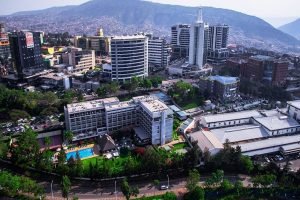
Most international Rwanda Safaris begin and end in Kigali, but treating the capital merely as an airport stop overlooks an important part of the country’s visitor experience.
Kigali provides travelers with an introduction to Rwanda’s history, culture and contemporary life before they enter the national parks. Depending on arrival times and interests, a city tour can be incorporated at the beginning or end of the safari.
One of the city’s most significant historical sites is the Kigali Genocide Memorial, which provides important context for understanding the 1994 Genocide against the Tutsi and Rwanda’s subsequent history. Visits should be approached respectfully and with sufficient time to engage thoughtfully with the information presented.
Beyond its historical sites, Kigali offers markets, art spaces, restaurants, craft outlets and neighborhoods that reveal different aspects of contemporary Rwanda. Travelers may also use their time in the city to purchase locally produced crafts and prepare for the next stage of their journey.
Kigali’s geographical position makes it a practical starting point for several Rwanda safari tours. Travelers can travel north toward Volcanoes National Park, east toward Akagera or begin longer circuits connecting multiple destinations.
Short itineraries are particularly dependent on Kigali’s accessibility. Travelers with only a few days may focus on a Rwanda gorilla safari from Kigali, while those with additional time can create more extensive circuits.
For international visitors combining Rwanda with Uganda, Kigali can also serve as a strategic gateway for certain cross-border itineraries. This has contributed to the popularity of safaris that begin in Rwanda before continuing toward Uganda’s gorilla trekking regions.
Taken together, Kigali, Volcanoes National Park, Akagera National Park, Nyungwe National Park, Gishwati-Mukura National Park and Lake Kivu demonstrate why Rwanda Safaris should not be viewed as a single-activity holiday. From encounters with mountain gorillas and chimpanzees to savannah game drives, forest exploration and lakeside relaxation, Rwanda offers enough diversity to create everything from a short gorilla trekking extension to a comprehensive multi-week East African adventure.
Gorilla Trekking in Rwanda
For many travelers, gorilla trekking in Rwanda is the experience that first inspires them to visit the country. The opportunity to enter the mountain forests of Volcanoes National Park and encounter a habituated family of mountain gorillas is one of Africa’s most distinctive wildlife experiences.
Unlike conventional wildlife viewing, where visitors usually observe animals from vehicles, mountain gorilla trekking requires travelers to enter the forest on foot. The journey itself is an essential part of the experience. Depending on the location of the gorillas, visitors may walk through dense vegetation, cross uneven ground and negotiate sections of muddy or steep terrain.
The physical effort involved varies considerably. Mountain gorillas move naturally throughout their habitat, meaning their location changes. Weather conditions can also influence trail conditions. Travelers should therefore prepare for the trek rather than assuming it will be an easy walk.
The experience begins before entering the forest. Visitors attend an official briefing where trekking procedures and appropriate behavior around gorillas are explained. Trekking groups then depart with authorized guides and trackers.
Once a gorilla family has been located, visitors must follow the instructions of their guides carefully. Gorilla trekking regulations are designed to minimize disturbance and help protect both visitors and gorillas. The experience should therefore be approached as a privileged wildlife encounter rather than simply a photography session.
Observing a mountain gorilla family can reveal an extraordinary range of behavior. A powerful silverback may remain relatively calm while younger gorillas play nearby. Mothers may feed while carrying infants, juveniles may climb vegetation, and different family members communicate through movements, expressions and vocalizations.
These moments help explain why a Rwanda gorilla trekking safari is often described by travelers as one of the highlights of an African journey.
Where Does Gorilla Trekking Take Place in Rwanda?
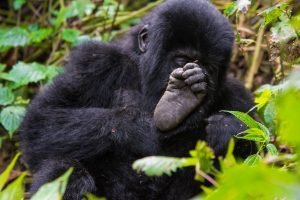
Gorilla trekking in Rwanda takes place in Volcanoes National Park, located in the northwestern part of the country. The park protects Rwanda’s section of the Virunga mountain ecosystem and forms part of the natural range of the mountain gorilla.
The park’s location makes it possible to incorporate gorilla trekking into both short and extended itineraries. Travelers arriving through Kigali can travel toward the Volcanoes region and stay near the park before undertaking their trek.
A longer itinerary can subsequently continue toward Lake Kivu, Nyungwe or other destinations. This flexibility is one reason Rwanda gorilla safaris work well both as standalone trips and as components of larger East African journeys.
Rwanda Gorilla Trekking Permits
A valid gorilla trekking permit is essential for participating in an authorized trek. Permit availability is limited because gorilla tourism is carefully controlled.
Travelers should therefore avoid leaving their gorilla permit until the final stages of safari planning, particularly when traveling during popular periods or when their dates are inflexible.
Permit fees, booking procedures and applicable regulations can change. Current information should always be confirmed during the booking process.
When arranging a Rwanda gorilla safari with Kyooma Gorilla Safaris, permit planning can be coordinated with accommodation, transportation and the wider itinerary. This helps prevent situations where travelers confirm flights or accommodation only to discover that trekking availability does not match their intended date.
What to Expect During Rwanda Gorilla Trekking
A typical gorilla trekking day starts early. After breakfast at the lodge, travelers transfer to the appropriate briefing area. Guides explain trekking procedures, safety considerations and rules governing the encounter.
Visitors are then organized for the day’s trek according to official arrangements. Porters may be available locally and can be extremely helpful for carrying bags and assisting travelers through challenging sections of terrain.
The trek begins as guides and trackers search for signs of gorilla movement. Walking times vary. This unpredictability should be expected rather than treated as an inconvenience because the gorillas are moving freely within their habitat.
Once the gorillas are found, the atmosphere often changes immediately. The focus moves from hiking to quiet observation.
Visitors should listen closely to their guides, control sudden movements and follow all applicable rules. Photography is an important part of the experience for many travelers, but taking time to simply observe the gorillas can be equally rewarding.
After the permitted viewing period, trekkers leave the gorillas and begin their walk back, completing one of the defining experiences of their Rwanda safari holiday.
Best Time for Gorilla Trekking in Rwanda
Gorilla trekking operates across different seasons, and there is no single period that suits every traveler. Drier periods are often preferred because forest trails may be less muddy and trekking conditions can be more manageable.
Wetter conditions, however, are part of the mountain rainforest environment and can occur at different times of year. Travelers should therefore prepare for rain regardless of their travel dates.
Seasonal conditions can also influence vegetation, photography and the overall atmosphere of the forest. Rather than selecting travel dates solely on the assumption that one month guarantees perfect weather, travelers should consider permit availability, wider safari plans, accommodation preferences and the other destinations they intend to visit.
What to Pack for Gorilla Trekking in Rwanda
Preparation can make a major difference to the comfort of a gorilla trek. Strong, comfortable walking or hiking footwear is particularly important because trails can become muddy and slippery. Long trousers and long-sleeved clothing can help protect the skin from vegetation and insects, while lightweight rain protection is useful because mountain weather can change quickly.
A small daypack can carry drinking water, permitted snacks, camera equipment and personal essentials. Gardening-style gloves can be useful when moving through vegetation, while gaiters may provide additional protection in muddy conditions.
Camera equipment should be manageable enough to carry through the forest. Travelers carrying heavier equipment may benefit from hiring a porter where available.
Most importantly, visitors should arrive prepared for an active forest experience rather than treating Rwanda gorilla trekking as a conventional sightseeing excursion. Appropriate preparation allows travelers to concentrate less on discomfort and more on the extraordinary environment and wildlife encounter around them.
For travelers who dream of seeing mountain gorillas while also experiencing chimpanzees, savannah wildlife, beautiful landscapes, and East African culture, gorilla trekking can become the centerpiece around which a much larger Rwanda Safari is built.
Need help Planning your wonderful safari?
You are just one step away from embarking on an unforgettable adventure with Kyooma Gorilla Safaris. Reach out to our expert term so we can get you well started