
Kibale Forest National Park
Kibale National Park is one of Uganda’s most remarkable protected areas and is widely recognized as the primate capital of East Africa. Covering approximately 795 square kilometres in western Uganda, the park forms part of the vast Guinea-Congo tropical rainforest ecosystem, making it a natural extension of the great rainforests of Central Africa that stretch through countries such as the Democratic Republic of the Congo. Its rich biodiversity, ancient tropical forest, abundant wildlife, and exceptional chimpanzee population have made Kibale National Park one of the continent’s premier destinations for primate tracking, birdwatching, wildlife photography, and eco-tourism.
The park is most famous for its extraordinary population of chimpanzees, with an estimated 1,500 individuals living within its dense forests. This represents one of the largest protected populations of wild chimpanzees anywhere in Africa. Visitors have an excellent chance of encountering these fascinating great apes during guided chimpanzee trekking excursions or the immersive Chimpanzee Habituation Experience, where guests spend extended hours observing researchers as they follow chimpanzees throughout their daily routines. Watching these intelligent primates communicate, forage, groom, hunt, and interact socially in their natural habitat is considered one of Uganda’s most unforgettable wildlife experiences.
Kibale National Park’s beauty extends far beyond its wildlife. The forest is surrounded by endless rolling tea plantations, picturesque crater lakes, fertile farmlands, and traditional villages, creating one of Uganda’s most scenic landscapes. On clear days, the snow-capped peaks of the majestic Rwenzori Mountains, often called the “Mountains of the Moon,” rise dramatically on the western horizon, providing a spectacular backdrop to the lush rainforest. This combination of tropical forest, volcanic crater lakes, cultivated tea estates, and mountain scenery makes Kibale one of the most visually captivating national parks in East Africa.
The park contains a remarkable diversity of habitats, including moist evergreen rainforest, semi-deciduous forest, woodland, swamps, riverine forests, and grassland clearings. These varied ecosystems support an exceptional concentration of wildlife and plant species. Towering mahogany trees, fig trees, wild palms, giant ferns, colourful orchids, and dense undergrowth create a rich forest environment that sustains countless mammals, reptiles, amphibians, butterflies, insects, and birds throughout the year.
Kibale National Park is internationally celebrated for its incredible primate diversity, boasting the highest concentration of primates found anywhere in Africa. In total, the park is home to 13 officially recorded primate species, while the surrounding Kibale ecosystem supports up to 15 primate species, making it a paradise for primate enthusiasts and wildlife researchers alike.
Besides the famous chimpanzees, visitors may encounter the striking Black-and-white Colobus Monkey, the colourful Red Colobus Monkey, the playful L’Hoest’s Monkey, Olive Baboons, Grey-cheeked Mangabeys, Blue Monkeys, Red-tailed Monkeys, Vervet Monkeys, Bush Babies, and the elusive Potto, among several others. The presence of so many primate species within a relatively compact area makes Kibale one of the finest destinations in the world for observing primates in their natural environment.
Bird enthusiasts also regard Kibale National Park as one of Uganda’s finest birdwatching destinations. More than 375 bird species have been recorded throughout the park and its surrounding wetlands, forests, and grasslands, making it an essential stop for both casual birders and serious ornithologists. The park’s varied habitats provide ideal conditions for forest specialists, migratory birds, and endemic Albertine Rift species.
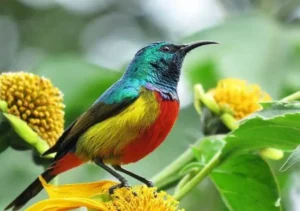
Among Kibale’s most prized bird species are the Albertine Rift endemics, birds found nowhere else or in only a few locations along the Albertine Rift mountain chain. These include the Black-capped Apalis, Blue-headed Sunbird, Collared Apalis, Dusky Crimsonwing, Purple-breasted Sunbird, and the Red-faced Woodland Warbler. Birdwatchers also regularly search for the spectacular Green-breasted Pitta, one of Africa’s most sought-after forest birds, along with the African Pitta during migration seasons. Other notable sightings include the Great Blue Turaco, African Grey Parrot, Crowned Eagle, Yellow-spotted Barbet, Narina Trogon, White-naped Pigeon, Black Bee-eater, and numerous hornbills, kingfishers, woodpeckers, flycatchers, and sunbirds.
Beyond its remarkable wildlife, Kibale National Park plays a vital role in conservation and scientific research. It has become one of Africa’s leading centres for primate behavioural studies, attracting researchers and conservationists from around the world. Long-term studies conducted within the forest have significantly advanced scientific understanding of chimpanzee behaviour, forest ecology, biodiversity conservation, and human-wildlife coexistence. The park is also an important watershed, helping regulate local climate, protect water catchments, and preserve one of Uganda’s last remaining tropical rainforest ecosystems.
For travellers seeking an authentic African rainforest adventure, Kibale National Park offers an unforgettable combination of close encounters with wild chimpanzees, exceptional primate diversity, world-class birdwatching, breathtaking scenery, and immersive nature experiences. Whether exploring the ancient forest trails, listening to the dawn chorus of tropical birds, photographing playful monkeys, or watching chimpanzees swing effortlessly through the forest canopy, every visit to Kibale National Park provides memories that last a lifetime. Its unique blend of biodiversity, conservation significance, and spectacular landscapes firmly establishes Kibale National Park as one of Uganda’s greatest natural treasures and one of the finest rainforest destinations in Africa.

Wildlife in Kibale Forest National Park
Kibale National Park is internationally celebrated for its exceptional biodiversity and is widely regarded as Africa’s premier destination for primate viewing. The park supports the highest concentration of primates on the continent, making it one of the most important conservation areas for primate research and protection. Its extensive tropical rainforest, wetlands, woodland, and grassland habitats provide an ideal environment for a remarkable variety of mammals, birds, reptiles, amphibians, and insects.
Primates of Kibale National Park
Kibale National Park is home to 13 officially recorded primate species, while the greater Kibale ecosystem supports up to 15 species, making it one of the richest primate habitats in the world. The park’s most famous resident is the Eastern Chimpanzee (Pan troglodytes schweinfurthii). Approximately 1,500 chimpanzees inhabit the forest, and several communities have been fully habituated for tourism and scientific research. Visitors can observe these intelligent great apes during guided chimpanzee trekking excursions or spend an extended day with researchers through the unique Chimpanzee Habituation Experience, witnessing their complex social behaviour, communication, feeding habits, hunting techniques, and family interactions.
Among Kibale’s most fascinating monkey species is the Uganda Mangabey (Lophocebus ugandae), a species endemic to Uganda and one that was only recently recognized as distinct from the grey-cheeked mangabey. These highly social monkeys travel in noisy groups through the forest canopy, feeding on fruits, seeds, insects, and young leaves.
The park is also one of the last strongholds of the endangered Ugandan Red Colobus (Piliocolobus tephrosceles). These striking reddish-brown monkeys are highly arboreal and are frequently observed moving gracefully through the upper forest canopy in large family groups. Their conservation is particularly important because their populations have declined significantly across much of their natural range.
Another commonly encountered species is L’Hoest’s Monkey (Allochrocebus lhoesti), sometimes called the mountain monkey. This shy forest primate is distinguished by its dark coat and distinctive white beard. Unlike many monkey species, L’Hoest’s monkeys spend considerable time on the forest floor searching for fruits, insects, and other food.
Visitors can also encounter the elegant Black-and-White Colobus Monkey (Guereza Colobus), easily recognized by its long white mantle and flowing tail. These beautiful monkeys spend nearly their entire lives in the forest canopy feeding primarily on leaves, making them among Africa’s most specialized primates.
The colourful Blue Monkey (Cercopithecus mitis) is another frequent sight within Kibale’s forests. Despite its name, the monkey appears more grey than blue, with subtle bluish facial colouring. Blue monkeys often feed on fruits, flowers, insects, and leaves while travelling in family groups.
Other primates inhabiting Kibale National Park include the Red-tailed Monkey, Vervet Monkey, Olive Baboon, Grey-cheeked Mangabey, Potto, Demidoff’s Galago (Bush Baby), and several nocturnal primate species that become active after sunset. The incredible diversity of primates makes every forest walk a rewarding wildlife experience.
Mammals of Kibale National Park
Although Kibale National Park is primarily famous for its primates, it also supports more than 70 mammal species, many of which thrive within the dense rainforest and surrounding wetlands.
The African Forest Elephant is one of the park’s largest mammals and is occasionally encountered along forest trails, particularly in quieter sections of the park. These elephants are generally smaller than the savannah elephants found in Uganda’s open grassland parks and play a vital role in maintaining the forest ecosystem by dispersing seeds and creating natural clearings.
Several antelope species inhabit Kibale’s forests, including the Bushbuck, Red Duiker, Blue Duiker, and the secretive Sitatunga, a semi-aquatic antelope specially adapted to swamp habitats surrounding the forest. These graceful herbivores are most active during the early morning and late afternoon.
Other common herbivores include the Common Warthog and the impressive African Buffalo, which occasionally move between the forest and nearby grasslands in search of grazing opportunities.
The park is also home to several members of the pig family, including the Bushpig and the massive Giant Forest Hog, the largest wild pig species in the world. Giant forest hogs are surprisingly elusive despite their enormous size and are most often observed feeding in forest clearings or swampy areas.
Carnivores of Kibale National Park
Although Kibale’s dense rainforest makes predator sightings relatively uncommon, the park supports a healthy population of fascinating carnivores that contribute to maintaining ecological balance.
The elusive Leopard is the park’s largest predator. Although rarely seen because of its nocturnal and secretive nature, signs such as tracks, claw marks, and occasional sightings confirm its presence throughout the forest.
Another remarkable resident is the African Golden Cat, one of Africa’s least-seen wild cats. This shy forest specialist inhabits dense vegetation where it preys on small mammals, birds, reptiles, and rodents.
The graceful Serval, known for its exceptionally long legs and excellent hunting abilities, occupies forest edges, wetlands, and grasslands surrounding Kibale. It primarily hunts rodents, birds, frogs, and insects.
Smaller carnivores inhabiting Kibale National Park include African Civets, Genets, Mongooses, Otters, and various species of forest weasels, all contributing to the park’s rich ecological diversity.
A Biodiversity Hotspot
Kibale National Park’s remarkable combination of primates, forest mammals, birds, butterflies, reptiles, and amphibians has earned it recognition as one of Africa’s most biologically diverse tropical forests. Whether visitors come to experience unforgettable chimpanzee encounters, photograph colourful monkeys, search for rare forest birds, or simply immerse themselves in one of East Africa’s most pristine rainforests, Kibale offers an extraordinary wildlife experience unlike any other destination in Uganda.
Bird Watching in Kibale Forest
Kibale National Park is one of Uganda’s premier birdwatching destinations, boasting an impressive 375+ recorded bird species spread across its tropical rainforest, wetlands, woodland, and surrounding crater lake ecosystems. The park attracts bird enthusiasts from around the world due to its rich diversity of forest birds, migratory species, and several rare Albertine Rift endemics.
Among the park’s most sought-after species are the Western Green Tinkerbird, Olive Long-tailed Cuckoo, African Pitta, Green-breasted Pitta, and the iconic African Grey Parrot, renowned for its remarkable intelligence and vocal abilities. Other notable birds frequently recorded in Kibale include the Great Blue Turaco, Black Bee-eater, Yellow-spotted Barbet, White-naped Pigeon, Blue-headed Sunbird, Purple-breasted Sunbird, Black-capped Apalis, Collared Apalis, Dusky Crimsonwing, and the Red-faced Woodland Warbler.
One of Kibale National Park’s most remarkable ornithological treasures is the Kibale Ground Thrush (Turdus kibalensis), a species first described from the park and regarded as endemic to Kibale National Park. This rare forest thrush highlights the park’s global importance for bird conservation and scientific research.
Birdwatching in Kibale National Park is rewarding throughout the year, with the best sightings occurring during the early morning and late afternoon when bird activity is at its peak. Popular birding locations include the Kanyanchu Forest, Bigodi Wetland Sanctuary, Sebitoli Forest, and the surrounding crater lakes, each offering excellent opportunities to observe both forest specialists and wetland species. Whether you are a dedicated birder or simply enjoy nature, Kibale National Park offers one of the richest and most rewarding birding experiences in East Africa.
Chimpanzee Tracking in Kibale Forest National Park
himpanzee trekking is the signature wildlife experience in Kibale National Park and one of Uganda’s most sought-after safari activities. Often referred to as the Primate Capital of East Africa, Kibale offers visitors one of the highest success rates for seeing wild chimpanzees anywhere on the continent. Thanks to several habituated chimpanzee communities and years of conservation efforts, visitors enjoy an impressive success rate of over 90% of locating chimpanzees during guided treks, making Kibale National Park the premier destination for chimpanzee tracking in Uganda.
Every trekking adventure begins at the Kanyanchu Visitor Centre, the park’s main tourism hub. Before entering the forest, visitors receive a comprehensive briefing from experienced Uganda Wildlife Authority (UWA) rangers covering chimpanzee behaviour, trekking guidelines, safety procedures, and conservation regulations. The guides also explain how to behave around the chimpanzees to ensure both visitor safety and the wellbeing of the animals.
Chimpanzee trekking takes place twice daily, with a morning session beginning at approximately 8:00 AM and an afternoon session starting at around 2:00 PM. Each trek typically lasts between two and five hours, depending on the location of the chimpanzee community on that particular day. Because the chimpanzees move freely through the rainforest in search of food, guides first locate their movements before leading visitors through the forest to find them.
The forest trails pass through towering tropical trees, dense vegetation, streams, and gentle hills. Although parts of the terrain can be moderately steep or muddy, particularly during the rainy seasons, the trek is generally considered manageable for anyone with a reasonable level of fitness. The experience is suitable for most travellers, and the breathtaking rainforest scenery makes the walk rewarding even before the chimpanzees are located.
The highlight of the excursion comes when visitors finally encounter a troop of wild chimpanzees. Watching these remarkable great apes interact in their natural environment is an unforgettable experience. Visitors observe them feeding on fruits and leaves, climbing effortlessly through the forest canopy, grooming one another, caring for their young, and communicating through a fascinating combination of calls, screams, pant-hoots, facial expressions, and gestures. Their intelligence, curiosity, and close genetic relationship to humans make every encounter both exciting and deeply moving.
Once the chimpanzees are located, standard chimpanzee trekking permits allow visitors to spend one full hour observing the animals. During this time, professional guides interpret the chimpanzees’ behaviour while ensuring that all visitors follow conservation rules, including maintaining the required viewing distance, keeping noise to a minimum, and avoiding any actions that may disturb the animals.
For travellers seeking a more immersive wildlife experience, Kibale National Park offers the Chimpanzee Habituation Experience (CHEX). Unlike the standard trek, this exclusive activity allows visitors to spend up to four hours, and in some cases much of the day, accompanying researchers and wildlife experts as they follow a semi-habituated chimpanzee community through the forest. Participants witness a broader range of natural behaviours, including nest leaving at dawn, feeding, territorial displays, social interactions, vocal communication, and evening nesting preparations. The Chimpanzee Habituation Experience provides a much deeper understanding of chimpanzee ecology and conservation and is considered one of Uganda’s finest primate experiences.
To protect both visitors and wildlife, participation in chimpanzee trekking is restricted to individuals aged 12 years and above. This minimum age requirement helps ensure that participants can comfortably complete the forest walk while reducing the likelihood of unpredictable behaviour that could disturb the chimpanzees.
Chimpanzee Trekking Permits
A valid chimpanzee trekking permit issued by the Uganda Wildlife Authority (UWA) is required before participating in any trek. Due to Kibale National Park’s popularity, permits frequently sell out during the peak travel seasons, particularly between June and September and December to February. It is therefore highly recommended that visitors reserve their permits several months in advance, especially if travelling during holidays or planning a safari with fixed dates.
Booking permits through a reputable tour operator such as Kyooma Gorilla Safaris offers the advantage of securing permits well in advance while combining them seamlessly with accommodation, transportation, and other safari activities throughout Uganda.
Sebitoli Chimpanzee Community
In addition to the well-established chimpanzee groups at Kanyanchu, Kibale National Park also protects another important chimpanzee population in the Sebitoli Sector, located approximately 12 kilometres east of Fort Portal. This area has been the focus of long-term chimpanzee habituation and conservation research. While Sebitoli has become increasingly important for scientific monitoring and conservation, tourism access has historically been more limited than at Kanyanchu. Visitors planning a chimpanzee safari should always confirm the latest availability of trekking opportunities with the Uganda Wildlife Authority or their tour operator, as tourism activities and permit allocations may change over time.
Chimpanzee trekking in Kibale National Park remains one of Africa’s most rewarding wildlife encounters. The combination of an exceptionally high sighting success rate, pristine tropical rainforest, experienced ranger guides, and the opportunity to observe our closest living relatives in their natural habitat creates an unforgettable safari experience that perfectly complements Uganda’s famous mountain gorilla trekking adventures.
Where To Stay?
The best accommodation depends largely on your travel style and safari itinerary. Visitors whose main priority is chimpanzee trekking often prefer lodges close to the Kanyanchu Visitor Centre, reducing early morning travel time. Luxury travellers usually choose exclusive forest lodges or crater lake retreats that combine exceptional comfort with stunning scenery. Mid-range lodges provide excellent value with comfortable facilities and beautiful locations, while budget camps and guesthouses offer affordable access to one of Uganda’s premier national parks.
Luxury Lodges
Mid-Range Accommodation
Budget Accommodation
Camping Near Kibale Nationa
Choosing the Best Place to Stay
At Kyooma Gorilla Safaris, we carefully select accommodation based on your budget, travel preferences, and safari itinerary. Whether you prefer an intimate luxury lodge overlooking a crater lake, a charming forest cottage surrounded by wildlife, or a comfortable budget camp close to the park entrance, we ensure your stay complements your unforgettable chimpanzee trekking adventure in Kibale National Park.
Best Time to Visit
The drier months of December to February and June to July are best for chimpanzee trekking. However, you can still go looking for the primates in the wetter months (March to May and August to November), which have the added attraction of low-season prices. The East African sky is also less hazy outside the drier periods.
Activities to do here
Chimps tracking through the depths of the Kibale Forest is a popular activity for tourists. Kibale Forest is inhabited by three large “communities” of chimps, with over 120 individuals. Only one community is allowed to be visited by tourists.
You could choose to go on a primate walk to see different monkeys. Over 15 primate species have been sighted in the Kibale forest and its surroundings. Follow the adjacent community-run Bigodi Swamp boardwalk trail and find wetlands, forest birds and impressive.
A visit to the Kibale forest is a chance to experience how primates connect with neighbouring communities. Leramn their way of life, get on a coffee tour and learn how communities make baskets and how they make banana/ beer the traditional way.
different mongooses and two species of otter.
Why Us?
Kyooma Gorilla Safaris is an indigenous African tour agency. Registered and licensed by the Uganda Tourism Board. Our license number is UTB/RTT/TO/2024/101313. Regulated by the Uganda Wildlife Authority, We are not only prioritize sustainable tourism and environmental conservation but also champion the well-being and dignity of local communities. We are committed to protecting human rights. Also, we promote the fundamental rights of all individuals. Specifically, we focus on supporting orphaned and vulnerable children in Uganda, Rwanda, and the Democratic Republic of the Congo.
Our Mission |
What We Do |
| Our mission is to promote and practice sustainable tourism in Uganda, Rwanda, and the Democratic Republic of the Congo. Deeply committed to minimizing the environmental impact of tourism while maximizing the benefits to local communities and wildlife. Strive to create unforgettable safari experiences that respect and preserve the natural and cultural heritage of our destinations. | We offer a wide range of safari experiences, including gorilla and chimpanzee trekking safaris. African wildlife tours, mountain climbing adventures, cultural tours, city tours, water-based activities, bird watching, and more. We customize safaris to meet our clients’ interests and operate in all major national game parks and reserves in Uganda, Rwanda, and the Democratic Republic of the Congo |
Kyooma Gorilla Safaris have good working relationship with hotels and lodges in all tourist destinations where we operate, enabling us to assist with hotel reservations, air ticketing, and other travel-related needs. Our proven record of effectively organizing sustainable safaris for individual and group travelers, leisure travel, and business and family trips ensures that our dedicated and experienced team will serve you with all your travel requirements.
Need help Planning your wonderful safari?
You are just one step away from embarking on an unforgettable adventure with Kyooma Gorilla Safaris. Reach out to our expert term so we can get you well started