
Wildlife game drives are at the heart of the classic African safari experience. They take travelers beyond photographs, documentaries, and wildlife stories and place them inside landscapes where elephants still move freely through woodland, lions rest on open plains, giraffes browse above the savannah, buffaloes gather around water, antelopes scan the grasslands for danger, and countless birds fill the skies, wetlands, trees, and riverbanks. For anyone dreaming about an African wildlife safari, few experiences compare with setting out in a safari vehicle at sunrise and entering a national park without knowing what wildlife encounter may be waiting around the next corner.
At Kyooma Gorilla Safaris, wildlife game drives form an important part of many of the tailor-made safaris we organize in Uganda and across East Africa. Although our name is strongly associated with mountain gorilla trekking, we believe that one of the best ways to experience Uganda is to combine its famous primate encounters with its remarkable savannah wildlife. Uganda gives travelers the opportunity to trek mountain gorillas in ancient forests, search for chimpanzees, watch elephants and lions during game drives, cruise waterways filled with hippos and crocodiles, observe hundreds of bird species, and explore remarkably different landscapes within one journey.
A wildlife game drive is much more than driving through a national park and looking for animals. It is a journey through a living ecosystem in which nothing is staged and no two outings are identical. Wildlife moves freely according to water, food, temperature, weather, breeding behavior, predator movements, seasonal conditions, and countless other natural influences. A lion seen beside a safari track one morning may be several kilometers away by afternoon.
An elephant herd may emerge from woodland without warning. A leopard can be hidden only a short distance from a vehicle yet remain almost invisible because of its camouflage. Large herds of antelopes may occupy open plains at one moment and disappear into another part of the ecosystem later in the day.
That unpredictability is what makes wildlife game drives so rewarding.
Rather than promising particular animals, we encourage our guests to enjoy the process of discovering the wilderness. An experienced safari guide searches for tracks, watches animal behavior, listens for alarm calls, studies habitats, scans tree lines, checks water sources, and interprets signs that most first-time visitors would easily overlook. Sometimes the search leads to a spectacular predator sighting. At other times, the most memorable experience may be watching elephants interact with their calves, seeing giraffes silhouetted against the morning sky, observing a herd of buffaloes crossing the savannah, or sitting quietly while hundreds of Uganda kob graze across the plains.
Uganda provides excellent opportunities for wildlife game drives in national parks such as Murchison Falls National Park, Queen Elizabeth National Park, Kidepo Valley National Park, and Lake Mburo National Park. Each destination has its own landscapes, wildlife communities, atmosphere, and safari character. A game drive across the northern savannahs of Murchison Falls feels very different from exploring the Kasenyi Plains of Queen Elizabeth, searching for tree-climbing lions in Ishasha, moving through the remote valleys of Kidepo, or watching zebra and impala in Lake Mburo.
Beyond Uganda, travelers can extend their safari into Kenya, Tanzania, and Rwanda, depending on available time and the wildlife experiences they want to include. This means a wildlife game drive can be part of a short Uganda holiday, a dedicated wildlife safari, a gorilla and wildlife combination, or a longer multi-country East African safari.
Throughout this complete guide to wildlife game drives, Kyooma Gorilla Safaris explains what a game drive is, how safari game drives work, the animals you may encounter, the best places for wildlife game drives in Uganda and Africa, morning versus afternoon drives, private versus shared safaris, safari vehicles, photography, family travel, safety, what to wear, what to pack, the best time to travel, and how to combine game viewing with gorilla trekking.
Whether you are visiting Africa for the first time or returning for another safari, understanding how game drives work can help you plan a journey that gives you enough time to slow down, observe wildlife properly, and experience the landscapes that make an African safari unforgettable.
What Is a Wildlife Game Drive?
A wildlife game drive is a journey through a national park, game reserve, wildlife conservancy, or other protected natural area, usually in a specially adapted safari vehicle, with the purpose of observing wild animals in their natural habitats. The experience is normally led by an experienced safari guide or driver-guide who understands the landscape, wildlife behavior, park road network, and habitats where particular animals are likely to occur.
The term “game” originated historically from references to wild animals pursued for hunting. Modern photographic safari tourism has transformed the experience. For the overwhelming majority of travelers joining the wildlife safaris we arrange, a game drive means observing, photographing, learning about, and appreciating wildlife rather than hunting it.
During a typical African safari game drive, guests travel through habitats such as savannah grasslands, woodland, wetlands, river valleys, crater areas, lakeshores, floodplains, rocky landscapes, and semi-arid plains. Different environments support different wildlife communities, which is why the guide continuously evaluates where to search.
A safari game drive is fundamentally different from visiting a zoo. Wild animals are not placed in particular areas for visitors and do not appear according to a timetable. They can move anywhere within their natural ranges. Some species are territorial, while others travel considerable distances depending on seasonal resources.
This makes every game drive a genuine search.
An experienced guide may notice lion tracks crossing the road, fresh elephant dung, broken vegetation, vultures gathering in a particular area, or antelopes suddenly staring toward one patch of grass. These details can provide clues about what may be happening nearby.
Game drives are therefore as much about interpretation as they are about transportation.
What Does “Game” Mean on an African Safari?
Travelers sometimes ask why the activity is called a game drive when no games are being played.
The word comes from older terminology in which wild animals were referred to as “game.” Over time, safari tourism changed dramatically, particularly with the growth of photographic tourism and wildlife conservation. Today, when we refer to wildlife game drives at Kyooma Gorilla Safaris, we mean responsible wildlife-viewing excursions conducted through protected natural areas.
Visitors may also hear terms such as game viewing, safari drive, wildlife drive, photographic safari, game-viewing safari, or safari game drive. These expressions generally describe similar vehicle-based wildlife experiences, although exact formats vary between destinations.
What Happens During a Wildlife Game Drive?
A wildlife game drive usually begins at a lodge, safari camp, or designated meeting point. Depending on the itinerary, guests may depart early in the morning, during the afternoon, or occasionally at night where night game drives are officially permitted.
Morning safari drives often require an early wake-up because travelers want to enter productive wildlife areas while temperatures are still cool. Guests may have breakfast before departure or take a light snack and eat a larger meal after returning.
Once the safari vehicle enters the wildlife-viewing area, the guide begins searching the landscape.
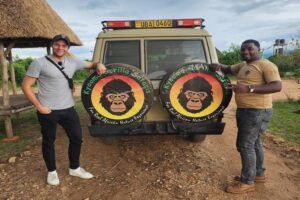 |
The vehicle usually moves relatively slowly because the objective is not to reach a destination quickly. Guides scan open grasslands, trees, bushes, woodland edges, water sources, and other habitats while also watching tracks and listening to wildlife.
When animals are located, the vehicle stops at an appropriate position and guests can watch, photograph, and learn about what they are seeing.
Some sightings last only a few minutes. Others may last much longer.
At Kyooma Gorilla Safaris, we encourage guests to appreciate animal behavior rather than treating the safari as a race to collect species. Spending twenty or thirty minutes watching an elephant family can reveal much more than stopping for a photograph and immediately driving away.
Patience often produces the most rewarding experiences.
How Do Safari Guides Find Wild Animals?
 |
Professional safari guides develop the ability to read landscapes and recognize signs that are easily missed by visitors.
Tracks can reveal whether lions, leopards, hyenas, elephants, buffaloes, or other animals recently moved through an area. Guides also observe dung, feeding remains, damaged vegetation, territorial markings, bird behavior, and sounds.
Alarm calls are particularly interesting.
Some animals respond vocally when predators are nearby. Antelopes may become unusually alert. Monkeys can produce warning calls. Birds sometimes react aggressively or noisily to predators. Experienced guides learn to notice these behavioral changes.
Water also plays an important role in wildlife distribution.
During drier conditions, animals may concentrate near permanent water sources. Elephants and buffaloes frequently move between feeding and drinking areas, while predators may take advantage of places where prey gathers.
Local knowledge is therefore extremely valuable.
A guide who understands the park knows which habitats to explore, which roads provide access to productive wildlife areas, and how animal movements change throughout the seasons.
Why Go on a Wildlife Game Drive?
Wildlife game drives allow travelers to experience animals as part of functioning ecosystems rather than viewing isolated species.
A photograph of an elephant can be beautiful, but watching a herd move through open savannah while calves remain close to their mothers provides a deeper understanding of the species. Seeing a lion sleeping under a tree is very different from observing how antelopes react when the same lion begins moving.
Game drives also allow travelers to cover large areas.
Many African national parks are too extensive to explore effectively on foot. A safari vehicle makes it possible to move between different habitats during the same outing while remaining in relative comfort.
Wildlife photography, birdwatching, landscape appreciation, conservation education, and simply spending time in nature are all important parts of the experience.
For our guests at Kyooma Gorilla Safaris, game drives are particularly valuable because they complement Uganda’s forest-based primate experiences.
Mountain gorilla trekking introduces travelers to the rainforest world of Bwindi or Mgahinga, while a savannah game drive reveals a completely different ecosystem.
Combining both gives a much broader understanding of Uganda’s natural diversity.
Types of Wildlife Game Drives
There are several different types of wildlife game drives, and each creates a different safari experience.
The most common are morning game drives, afternoon game drives, evening game drives, night game drives, full-day game drives, private game drives, and shared game drives.
Specialized photographic and birdwatching game drives can also be arranged depending on the destination and traveler interests.
Morning Game Drives
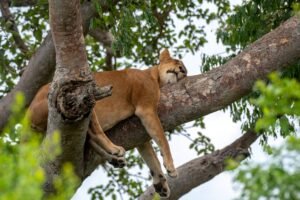 |
Morning wildlife game drives normally begin around sunrise or earlier depending on local regulations and safari arrangements.
They are among the most popular safari activities because temperatures are generally cooler and wildlife can be active during the early hours.
Predators may still be moving after nighttime activity, while herbivores often feed before daytime temperatures rise.
Morning drives also provide beautiful light for photography.
When we build a wildlife safari itinerary, we often include early departures in destinations where doing so makes practical sense.
Afternoon Game Drives
Afternoon game drives generally begin after lunch and continue toward sunset.
Wildlife can still be seen during the afternoon, although some animals may rest during the hottest part of the day.
As temperatures fall, activity may increase.
Afternoon drives are particularly useful when travelers have spent the morning participating in another activity or when they arrive at a national park around midday.
Evening Game Drives
Late-afternoon and evening wildlife drives provide excellent opportunities to experience changing light and animal activity.
The final hours before sunset are often beautiful for photography.
Animals that have spent the hotter part of the day resting may begin feeding or moving again, while predators can become increasingly active as darkness approaches.
Night Game Drives
Night game drives explore wildlife after dark and are only conducted in places where regulations permit them.
They can reveal nocturnal species that are rarely encountered during regular daytime drives.
Because nighttime wildlife viewing requires specialized guiding and responsible spotlight use, guests should only participate through properly authorized arrangements.
Full-Day Game Drives
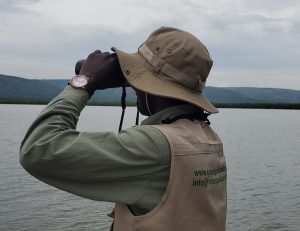 |
Full-day game drives are ideal for travelers who want to maximize time in the wildlife area.
Instead of returning to the lodge after a few hours, guests can remain inside the park and explore more distant sections.
Packed lunches may be carried and enjoyed at designated areas.
Full-day drives are particularly popular with photographers and serious wildlife enthusiasts.
Private Game Drives
Private game drives reserve the safari vehicle for one individual, couple, family, or private group.
At Kyooma Gorilla Safaris, private safari arrangements are particularly useful when guests want greater flexibility.
Photographers may wish to remain at sightings for longer periods. Families may need breaks. Birdwatchers may want to stop regularly for smaller species.
A private vehicle makes these preferences easier to accommodate.
Shared Game Drives
Shared wildlife game drives involve travelers who are not necessarily part of the same booking using one safari vehicle.
They can reduce costs and provide a social experience.
However, travelers have less control over departure times, route choices, duration, and the amount of time spent at each sighting.
Morning vs Afternoon Game Drives: Which Is Better?
There is no universal winner between morning and afternoon game drives.
At Kyooma Gorilla Safaris, we usually recommend experiencing both whenever the itinerary allows.
Morning drives offer cool temperatures, early wildlife activity, bird calls, and attractive light.
Afternoon drives provide different wildlife movements, warmer landscapes, and beautiful sunset photography.
Even in the same national park, a morning and afternoon drive can feel completely different.
Animals seen in one area early in the day may have disappeared several hours later, while animals that were hidden during the morning can become visible toward evening.
If a guest only has time for one wildlife drive, an early morning departure is often an excellent option. However, we would never suggest that an afternoon drive is automatically less rewarding.
Wildlife decides the quality of the encounter.
What Is the Best Time of Day for a Game Drive?
Early mornings and late afternoons are widely favored because temperatures are cooler and many animals are active.
Midday should not automatically be dismissed, however.
Elephants, giraffes, buffaloes, antelopes, hippos, birds, and many other species remain visible throughout the day. Lions and leopards may rest in shaded areas, and finding them at rest can still produce an exceptional sighting.
A full-day game drive can therefore be extremely productive.
For dedicated wildlife enthusiasts, spending more time in the field usually creates more opportunities than trying to identify one perfect hour.
What Animals Can You See on a Wildlife Game Drive?
 |
The animals encountered during a wildlife game drive depend entirely on the destination.
African wildlife is not distributed evenly across the continent, and no national park contains every famous safari species.
Across Uganda and neighboring East African countries, game drives may reveal elephants, lions, leopards, buffaloes, giraffes, zebras, hippos, warthogs, several species of antelope, hyenas, jackals, monkeys, baboons, crocodiles, and an enormous diversity of birds.
Some destinations provide opportunities to see cheetahs, rhinos, wildebeest, and other species that are absent or uncommon elsewhere.
This is one reason we carefully select combinations of national parks when designing wildlife safaris.
Visiting two or three ecosystems can substantially increase the diversity of wildlife and landscapes encountered.
Seeing Lions During a Wildlife Game Drive
|
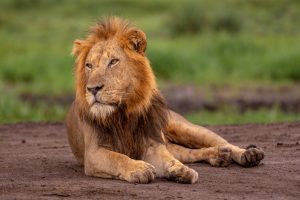
Lions are among the most sought-after animals on an African safari.
Their social structure, size, behavior, and reputation make them fascinating to observe.
Guests may encounter a solitary male, several males, females with cubs, or a larger pride depending on the ecosystem and circumstances.
Lions spend significant amounts of time resting, particularly during warm conditions.
A pride that appears inactive can suddenly change behavior when temperatures fall, prey approaches, or something attracts its attention.
In Uganda, Queen Elizabeth National Park and Murchison Falls
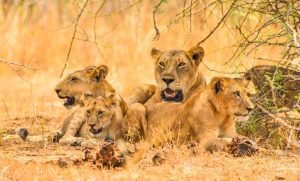
National Park are important lion-viewing destinations.
The Ishasha sector of Queen Elizabeth is especially associated with its tree-climbing lions.
However, we always emphasize that lions are wild animals and sightings cannot be guaranteed.
Seeing Leopards on Safari
Leopards are among Africa’s most exciting but elusive predators.
Unlike lions, which are often social, leopards are generally solitary and exceptionally well camouflaged.
Their spotted coats allow them to disappear into vegetation, branches, and shadows.
A leopard can sometimes be resting in a tree only a short distance from a road yet remain invisible to an inexperienced observer.
Finding one therefore requires patience, luck, and strong guiding.
For many travelers, a leopard sighting becomes one of the most memorable moments of the safari precisely because it cannot be taken for granted.
Elephant Encounters During Game Drives
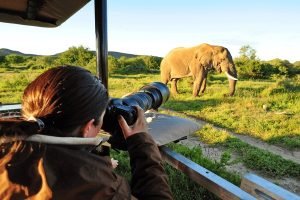
Elephants are often among the most impressive animals encountered during Uganda wildlife game drives.
Their enormous size is striking, but their behavior is equally fascinating.
Family herds may include adult females, juveniles, and calves. Mature males can sometimes be encountered alone or with other males.
Guests may watch elephants feeding, crossing roads, bathing, drinking, dusting themselves, or interacting socially.
Our guides always maintain respect for elephant behavior.
Safari vehicles should give elephants appropriate space and should never intentionally provoke an animal for a closer photograph.
Buffaloes on Safari
African buffaloes are another major feature of many wildlife game drives.
Large herds can be impressive, especially when seen moving across open landscapes or gathering near water.
Older males may sometimes occur separately from larger breeding herds.
Although buffaloes can appear calm, they are powerful wild animals and should always be treated with respect.
From inside an appropriately positioned safari vehicle, guests can observe them safely while learning about herd behavior, grazing, predator relationships, and their importance within savannah ecosystems.
Giraffes on Wildlife Game Drives
Few animals symbolize the African landscape as strongly as giraffes.
Their height makes them visible across open habitats, but watching them closely reveals remarkable adaptations.
Giraffes use their height and long tongues to browse vegetation unavailable to many other herbivores.
Their movement can appear almost slow-motion until they begin running.
In Uganda, giraffe encounters are particularly associated with destinations including Murchison Falls and Kidepo Valley, while they can also be encountered in Lake Mburo.
Photographers especially enjoy giraffes because their height, shape, and relationship with the surrounding landscape create striking compositions.
Antelopes and Other Savannah Herbivores
Antelopes are sometimes overlooked by first-time safari travelers because attention is concentrated on lions and elephants.
We encourage our guests to appreciate them.
Different antelope species occupy different ecological niches and show remarkable behavioral adaptations.
During Uganda game drives, travelers may encounter Uganda kob, waterbuck, impala, topi, bushbuck, hartebeest, eland, and other species depending on the park.
Large concentrations of antelope can also influence predator distribution.
Understanding prey species therefore helps travelers understand the entire ecosystem.
Birdwatching During Game Drives
A Uganda wildlife game drive is also an excellent birdwatching experience.
Travelers do not need to be specialist birders to appreciate the variety.
Large raptors, vultures, colorful woodland birds, waterbirds, ground-dwelling species, kingfishers, hornbills, and many others may appear throughout a safari.
Birds also provide clues about what is happening in the environment.
Vultures gathering in an area may indicate feeding activity. Smaller birds can produce alarm calls. Raptors may be seen hunting.
For dedicated birdwatchers, Kyooma Gorilla Safaris can design itineraries with slower game drives and additional time in productive birding habitats.
The Big Five and Wildlife Game Drives
The term “Big Five” refers to lion, leopard, elephant, African buffalo, and rhinoceros.
The expression originally came from hunting terminology but is now widely used in photographic safari tourism.
Many travelers arrive in Africa hoping to see all five.
At Kyooma Gorilla Safaris, we believe the Big Five can be an enjoyable safari objective, but they should not become the only measure of a successful wildlife journey.
Uganda’s wildlife experience extends far beyond five species.
Giraffes, hippos, zebras, crocodiles, antelopes, primates, birds, and countless smaller animals contribute just as much to the ecosystem.
A safari becomes considerably richer when travelers appreciate the complete environment rather than treating wildlife viewing as a checklist.
Best Places for Wildlife Game Drives in Uganda
Uganda offers remarkably diverse game-drive experiences.
The four destinations we most strongly associate with classic vehicle-based wildlife viewing are Murchison Falls National Park, Queen Elizabeth National Park, Kidepo Valley National Park, and Lake Mburo National Park.
These parks are also listed among Uganda’s major protected areas by the Uganda Wildlife Authority.
Each deserves to be experienced for different reasons.
Wildlife Game Drives in Murchison Falls National Park
Murchison Falls National Park is one of Uganda’s most important wildlife safari destinations and features prominently in many of the itineraries we organize.
The park combines expansive savannah, woodland, river environments, and the dramatic Nile.
Wildlife game drives generally explore productive savannah areas where travelers can search for giraffes, elephants, buffaloes, antelopes, lions, warthogs, and numerous bird species.
The open landscapes make Murchison particularly rewarding for first-time safari travelers because many larger animals can sometimes be observed across wide areas.
The experience becomes even more interesting when game drives are combined with a boat journey on the Nile.
This allows travelers to experience the ecosystem from two completely different perspectives.
From the safari vehicle, guests explore terrestrial habitats.
From the water, they may observe hippos, crocodiles, elephants, buffaloes, waterbirds, and other wildlife associated with the river.
Morning Game Drives in Murchison Falls
Morning departures allow travelers to explore the savannah while temperatures are still relatively cool.
Guides search for predators, large herbivores, and other wildlife while the rising sun creates beautiful landscapes.
The exact route depends on road conditions and recent animal movements.
Afternoon Game Drives in Murchison Falls
Afternoon game drives can be equally rewarding.
Animals may move toward water as temperatures change, and the final hours of daylight provide attractive photographic conditions.
Depending on the itinerary, we may combine a morning game drive with an afternoon boat safari or reverse the order.
This gives our guests a varied day rather than repeating one activity.
Wildlife Game Drives in Queen Elizabeth National Park
Queen Elizabeth National Park is one of the most popular wildlife destinations we include in Uganda safari itineraries.
Its varied landscapes create excellent opportunities for combining game drives with boat safaris, birdwatching, and travel between Uganda’s major primate destinations.
Game drives may reveal elephants, buffaloes, Uganda kob, waterbuck, warthogs, lions, leopards, and other wildlife.
The Kasenyi Plains are particularly well known for classic savannah game viewing.
Large numbers of Uganda kob can be encountered in some areas, which makes the landscape especially interesting for predator-prey interactions.
A Queen Elizabeth safari also combines naturally with the Kazinga Channel area, where boat-based wildlife viewing provides a different experience.
For guests traveling between Kibale and Bwindi, Queen Elizabeth can serve as an important wildlife component of a primate-focused itinerary.
Game Drives in the Kasenyi Plains
The Kasenyi Plains are among Queen Elizabeth National Park’s best-known game-viewing areas.
Open grassland provides opportunities to scan for Uganda kob, buffaloes, warthogs, elephants, lions, and other animals.
Because visibility can be relatively good across the plains, guides can search considerable distances.
The experience changes throughout the day and season, which is why multiple drives are useful whenever time allows.
Tree-Climbing Lions and Game Drives in Ishasha
The Ishasha sector in the southern part of Queen Elizabeth National Park is famous for tree-climbing lions.
Seeing lions resting in large trees can become one of the highlights of a Uganda wildlife safari.
However, the phrase “tree-climbing lions” should never be interpreted as a guarantee that every visitor will see lions in a tree.
The animals move naturally and may be on the ground, hidden in vegetation, resting elsewhere, or not visible during a particular drive.
At Kyooma Gorilla Safaris, we prefer setting realistic expectations.
When the lions are located, the encounter can be exceptional. When they are not, Ishasha still provides beautiful landscapes and opportunities to observe other wildlife.
Ishasha is also particularly convenient on itineraries connecting Queen Elizabeth National Park with Bwindi Impenetrable National Park.
This allows guests to move from savannah wildlife to mountain gorilla habitat within the same broader safari journey.
Wildlife Game Drives in Kidepo Valley National Park
For travelers seeking remoteness, dramatic scenery, and a strong sense of wilderness, Kidepo Valley National Park is one of Uganda’s most remarkable safari destinations.
Its geographical position in northeastern Uganda means it requires more travel time than parks on the popular southwestern circuit.
That remoteness is also part of its appeal.
Kidepo’s wide valleys, mountain backdrops, open savannah, and relatively isolated setting produce a distinctive safari atmosphere.
Game drives provide opportunities to search for elephants, buffaloes, giraffes, lions, antelopes, and other wildlife.
The landscapes alone can justify the journey.
Travelers who have enough time to include Kidepo often appreciate that it feels different from the busier circuits.
At Kyooma Gorilla Safaris, we normally recommend Kidepo for guests who have sufficient safari days or for travelers whose priority is an extended wildlife-focused Uganda itinerary.
Wildlife Game Drives in Lake Mburo National Park
Lake Mburo National Park is smaller than Uganda’s largest savannah parks but provides an important wildlife experience, particularly because of the combination of species found there and its location within common southwestern travel routes.
Game drives may reveal zebras, impalas, giraffes, elands, buffaloes, warthogs, and numerous birds.
For travelers who have spent several days in forests searching for gorillas or chimpanzees, Lake Mburo provides a welcome return to open wildlife landscapes.
Its relatively compact nature also makes it suitable for shorter visits.
Depending on the itinerary, Lake Mburo can be incorporated toward the beginning or end of a Uganda wildlife and gorilla safari.
Best Wildlife Game Drives in East Africa
East Africa is one of the world’s great safari regions.
Uganda, Kenya, Tanzania, and Rwanda each provide different wildlife experiences.
At Kyooma Gorilla Safaris, our strongest emphasis is on Uganda and gorilla-centered East African journeys, but multi-country combinations can be designed for travelers who want a broader safari.
Wildlife Game Drives in Kenya
Kenya has a long-established safari tradition and is home to famous wildlife areas including the Maasai Mara and other national parks and reserves.
Travelers can experience open savannah landscapes, large herbivore populations, predators, and exceptional photographic opportunities.
Kenya combines particularly well with Uganda for travelers who want classic savannah wildlife followed by mountain gorilla trekking.
A multi-country itinerary might begin with Kenya wildlife viewing and continue by regional flight into Uganda for gorilla trekking and additional national parks.
Wildlife Game Drives in Tanzania
Tanzania provides some of Africa’s largest and most celebrated wildlife ecosystems.
The Serengeti and other northern safari destinations attract travelers seeking predators, large herbivore concentrations, open landscapes, and extensive wildlife viewing.
Tanzania can also be combined with Uganda or Rwanda for travelers who want to add mountain gorilla trekking to a classic savannah safari.
Because distances and regional logistics can be significant, we recommend designing such journeys carefully rather than trying to visit too many destinations in too few days.
Wildlife Game Drives in Rwanda
Rwanda is best known internationally for mountain gorilla trekking in Volcanoes National Park, but travelers can also incorporate savannah wildlife experiences into a broader journey.
Rwanda can be particularly convenient for guests combining Kigali with southwestern Uganda.
At Kyooma Gorilla Safaris, we organize itineraries that use Kigali as an arrival or departure point when doing so makes practical sense for the client’s route.
This can make it possible to combine Rwanda experiences with Bwindi gorilla trekking and Uganda wildlife parks.
Uganda vs Kenya vs Tanzania for Wildlife Game Drives
Best Time for Wildlife Game Drives in Uganda
Wildlife game drives can be enjoyed throughout the year, but conditions change according to rainfall, vegetation, temperatures, and wildlife movements.
The idea of a single “best time” can therefore be misleading.
Drier periods can provide easier road conditions in some areas and may cause wildlife to concentrate around permanent water.
Vegetation can also become less dense, sometimes making animals easier to locate.
Wetter periods bring greener landscapes, dramatic skies, fresh vegetation, and excellent birding opportunities.
The best travel period ultimately depends on what the guest values most.
When planning with Kyooma Gorilla Safaris, we consider the complete itinerary rather than game drives in isolation.
If a safari also includes gorilla trekking, chimpanzee trekking, boat trips, or other activities, all components need to work together.
Wildlife Game Drives During the Dry Season
Dry conditions can produce excellent game viewing because animals depend heavily on available water.
Waterholes, lakes, channels, and rivers can become increasingly important gathering points.
Vegetation may also become shorter or less dense in some environments.
Road conditions can be easier than during periods of heavy rain, although dust levels may be higher.
Dry-season travel is popular, which can also mean higher demand for accommodation and other safari services.
Guests planning peak-period travel should therefore arrange their safari well in advance, particularly when gorilla permits are part of the itinerary.
Wildlife Game Drives During the Wet Season
The wet or green season should not be considered a poor time for safari.
Rain transforms many landscapes.
Savannah becomes greener, vegetation appears fresh, and dramatic skies can produce beautiful photographs.
Bird activity can be exceptional.
There may also be fewer travelers in some areas depending on the destination and travel period.
The main challenges are occasional rain, muddy roads, and thicker vegetation.
This is one reason we use suitable safari vehicles and build enough flexibility into itineraries.
Wildlife Game Drives and the Green Season
The phrase green season generally describes wetter periods when landscapes become lush.
For photographers, green backgrounds can be spectacular.
Young animals may also be present at certain times depending on species and ecosystem.
Guests who prioritize scenery and birdlife may find this season particularly rewarding.
Safari quality should therefore never be judged solely according to whether the grass is dry.
Africa’s wilderness is beautiful in very different ways throughout the year.
Safari Vehicles Used for Wildlife Game Drive
The safari vehicle has a major influence on comfort and wildlife viewing.
At Kyooma Gorilla Safaris, we consider transportation an important part of the safari rather than merely a way of traveling between hotels.
East African road journeys can involve long distances, unpaved roads, national park tracks, and changing weather conditions.
A suitable safari vehicle therefore needs to handle both transfers and wildlife viewing.
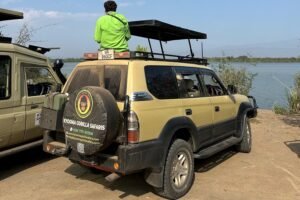
Four-wheel-drive safari vehicles are commonly used, with configurations that may include pop-up roofs or large viewing windows.
A pop-up roof allows travelers to stand when appropriate and enjoy a broader view of the landscape while photographing wildlife.
Vehicle arrangements vary according to itinerary, group size, destination, and safari style.
Why a 4×4 Safari Vehicle Matters
National park roads can change dramatically between dry and wet conditions.
Rain may create mud, standing water, erosion, and slippery surfaces.
Four-wheel-drive capability provides additional confidence in difficult conditions.
The vehicle should also have enough space for passengers, luggage, cameras, drinking water, and other safari equipment.
Long drives can become tiring, which makes seating comfort important.
When planning a safari, guests should therefore consider the quality of ground transportation rather than comparing packages only by accommodation category.
Private vs Shared Wildlife Game Drives
Choosing between private and shared game drives affects flexibility, privacy, and cost.
A private safari vehicle gives travelers considerably more control.
You can spend longer watching a leopard, stop repeatedly for birds, take additional photography time, or adjust the pace for children.
Couples and honeymooners may also value privacy.
Shared game drives can be more economical.
They can work particularly well for solo travelers or guests staying at lodges that operate scheduled departures.
However, decisions have to reflect the interests of everyone in the vehicle.
At Kyooma Gorilla Safaris, our tailor-made itineraries allow us to recommend the arrangement that best matches the guest’s expectations.
How Long Does a Wildlife Game Drive Last?
There is no universal duration for a game drive.
A standard morning or afternoon drive may last several hours, while a full-day drive can occupy most of the day.
The actual amount of wildlife-viewing time also depends on where the lodge is located.
An accommodation property close to productive wildlife areas may provide quicker access than one requiring a substantial transfer before game viewing begins.
For this reason, we look beyond simple itinerary labels such as “morning game drive.”
The quality and practical structure of that morning matter.
How Many Game Drives Should You Do?
A single game drive can be exciting, but it provides only one snapshot of a constantly changing ecosystem.
Whenever time allows, we recommend multiple wildlife-viewing opportunities.
Two drives in the same park can produce completely different sightings.
For travelers spending two nights at a national park, a morning game drive and another afternoon or morning excursion can create a more complete experience.
Longer wildlife-focused safaris may include several game drives across different parks.
The ideal number depends on how much the traveler enjoys being in a safari vehicle and how many other activities need to fit into the itinerary.
Wildlife Photography During Game Drives
Photography is one of the most rewarding aspects of a wildlife safari.
Modern smartphones can capture impressive images, while dedicated cameras with telephoto lenses provide additional flexibility for distant wildlife.
The most important photographic tool, however, is patience.
Rather than immediately taking dozens of photographs, observe the animal.
Consider the direction of light, background, movement, and behavior.
Sometimes waiting a few minutes completely changes the scene.
A lion may raise its head.
An elephant calf may emerge from behind its mother.
Two giraffes may cross.
A bird may take flight.
Good wildlife photography frequently comes from anticipating behavior rather than simply reacting to it.
Best Time of Day for Safari Photography
Early morning and late afternoon usually provide softer natural light than midday.
The warm light around sunrise and sunset can create beautiful photographs.
Midday photography is still possible, particularly when interesting behavior is happening.
Guests should never ignore a rare wildlife encounter merely because the light is not perfect.
The memory matters more than photographic perfection.
Private Game Drives for Photographers
Serious photographers often benefit from private safari vehicles.
A shared vehicle may need to move because other guests want to continue the drive.
With a private arrangement, photographers can often spend more time waiting at individual sightings.
Seating can also be planned around camera equipment.
When arranging photographic-oriented safaris, we encourage guests to tell Kyooma Gorilla Safaris about their interests in advance so the itinerary can reflect them.
What Camera Equipment Should You Take?
Equipment requirements vary enormously.
Casual travelers can enjoy a safari with a smartphone.
Photography enthusiasts may carry interchangeable-lens cameras, telephoto lenses, wide-angle lenses, batteries, memory cards, cleaning equipment, and protective bags.
Dust is common during dry periods, so equipment should be protected when not in use.
Guests should also remember that the best safari experience sometimes happens when the camera is lowered.
It is worth spending time simply watching.
What Should You Wear on a Wildlife Game Drive?
Safari clothing should prioritize comfort, practicality, and protection from the weather.
Neutral, comfortable clothing works well in most game-drive environments.
Lightweight trousers or shorts depending on conditions, breathable shirts, a hat, sunglasses, and comfortable footwear are useful.
Layering is especially important.
Early mornings can feel cool inside a moving safari vehicle, even when the afternoon becomes hot.
A light sweater, fleece, or jacket can therefore be valuable.
During wetter periods, a light waterproof layer may also be useful.
What Should You Pack for a Wildlife Game Drive?
For most game drives, we recommend carrying only what you need inside the vehicle.
Useful items include binoculars, a camera or phone, spare batteries, sufficient memory-card space, drinking water, sunscreen, sunglasses, a hat, insect repellent where appropriate, personal medication, and a light jacket.
A small daypack can help keep everything organized.
Large luggage normally remains at the accommodation or in the main vehicle storage area.
Binoculars are particularly valuable.
Even when animals can be seen clearly with the naked eye, binoculars reveal details in distant wildlife and transform birdwatching.
Are Wildlife Game Drives Safe?
Wildlife game drives are conducted in environments inhabited by genuinely wild animals.
Safety therefore depends on following park rules and guide instructions.
Guests should normally remain inside the safari vehicle unless the guide confirms that getting out is both permitted and safe.
Animals may be hidden in grass, woodland, or vegetation even when the area appears empty.
Travelers should never attempt to approach wildlife on foot without an authorized activity and professional guide.
Inside the vehicle, guests should also avoid unnecessary shouting, sudden behavior, feeding animals, or attempting to attract wildlife.
A responsible guide continuously evaluates the environment and animal behavior.
Can You Leave the Safari Vehicle?
Usually, travelers may only leave their vehicles at approved locations or when specifically instructed by guides.
These can include picnic sites, viewpoints, visitor areas, lodges, and designated activity points.
Leaving the vehicle spontaneously because an animal appears far away is unsafe and may violate park regulations.
Guests should always ask their guide.
How Close Can Safari Vehicles Get to Wildlife?
The correct viewing distance depends on the species, circumstances, local rules, and animal behavior.
Closer is not automatically better.
A slightly more distant animal behaving naturally can provide a much better experience than an animal surrounded or pressured by vehicles.
At Kyooma Gorilla Safaris, responsible wildlife viewing takes priority over forcing a photograph.
Animals should be given space to move.
Roads should not be blocked unnecessarily.
Guides should avoid disturbing feeding, resting, hunting, mating, or parental behavior.
Wildlife Game Drive Etiquette
Good safari etiquette improves the experience for wildlife and other travelers.
Noise should be controlled around sensitive sightings.
Guests should avoid shouting across vehicles.
Litter should never be thrown into the park.
Animals should never be fed.
Travelers should also respect the viewing opportunities of other vehicles.
At a popular lion or leopard sighting, allowing reasonable space makes the experience better for everyone.
A safari is not a competition.
Responsible Wildlife Tourism
The future of African wildlife depends on conservation, effective protected-area management, responsible tourism, and support from communities living around wildlife areas.
Tourism can contribute to conservation when it is managed responsibly.
Travelers also have a role.
Choosing responsible operators, following regulations, respecting wildlife, avoiding litter, and supporting ethical experiences all matter.
At Kyooma Gorilla Safaris, we encourage guests to view animals as wild inhabitants of their ecosystems rather than attractions placed there for tourism.
Wildlife Game Drives for Families With Children
A family safari can be one of the most memorable experiences parents share with children.
However, game drives should be planned according to age and attention span.
Young children may become tired during very long drives.
Private vehicles provide useful flexibility because families can stop, return to the lodge earlier, or adjust the pace.
Guides can also make the experience more engaging by introducing tracks, animal sounds, birds, insects, and interesting behavior rather than focusing only on large mammals.
Parents should discuss children’s ages with us during safari planning so we can recommend an appropriate itinerary.
Wildlife Game Drives for Older Travelers
Game drives can suit older travelers extremely well because most wildlife viewing takes place from the vehicle.
Nevertheless, road conditions can sometimes be rough.
Guests with mobility considerations should tell us in advance.
We can then consider vehicle access, lodge layout, driving times, room locations, and the overall pace of the safari.
A private itinerary is particularly helpful because it can be adjusted according to comfort.
Wildlife Game Drives for Solo Travelers
Solo travelers can enjoy either private or shared safari arrangements depending on budget.
A private safari provides maximum flexibility but generally costs more per person because vehicle and guide costs are not shared.
Group or shared options can reduce the individual cost.
Uganda is also well suited to solo travelers who want a combination of wildlife and primates because structured activities such as gorilla trekking naturally bring visitors together with other participants.
Wildlife Game Drives for Couples and Honeymooners
Couples often value privacy and flexibility.
A private safari vehicle allows guests to enjoy wildlife without sharing every moment with a larger group.
It can also make photography easier and provide more control over the daily pace.
For honeymoon itineraries, we can combine private game drives with carefully selected lodges, gorilla trekking, scenic experiences, and more relaxed sections of the journey.
Game Drives vs Walking Safaris
Game drives and walking safaris provide fundamentally different experiences.
A vehicle allows travelers to cover much larger distances and search for large wildlife.
Walking focuses more strongly on details.
Tracks, plants, insects, smaller animals, sounds, and landscape interpretation become more noticeable on foot.
Where walking activities are properly authorized and professionally guided, they can complement game drives extremely well.
We do not consider one superior to the other.
They simply reveal different sides of the wilderness.
Game Drives vs Boat Safaris
Boat safaris are another excellent complement to game drives.
From a vehicle, travelers primarily observe land-based wildlife.
From a boat, attention shifts toward riverbanks, channels, lakeshores, hippos, crocodiles, waterbirds, and animals approaching water.
Uganda is particularly strong for combining these experiences.
Murchison Falls and Queen Elizabeth itineraries can include both vehicle and water-based wildlife viewing.
For many guests, this variety prevents the safari from feeling repetitive.
Game Drives vs Gorilla Trekking
Wildlife game drives and gorilla trekking are completely different safari activities.
A game drive is primarily conducted by vehicle through open or semi-open wildlife habitats.
Gorilla trekking involves entering forest on foot with professional guides and trackers to search for a habituated mountain gorilla group.
Game drives allow travelers to encounter many different species across a large area.
Gorilla trekking focuses intensely on one extraordinary primate encounter.
The contrast is precisely why combining them works so well.
One experience belongs to the savannah.
The other belongs to the rainforest.
Together they create one of Africa’s most diverse safari journeys.
Combining Wildlife Game Drives With Gorilla Trekking
At Kyooma Gorilla Safaris, this is one of the combinations we most strongly recommend.
Uganda gives travelers the rare opportunity to combine classic African game viewing with mountain gorilla trekking without requiring an extremely complicated multi-country itinerary.
A journey might begin with Murchison Falls National Park for wildlife game drives and Nile experiences, continue to Kibale for chimpanzee trekking, explore Queen Elizabeth National Park by vehicle and boat, and finish in Bwindi Impenetrable National Park for gorilla trekking.
For travelers with less time, Queen Elizabeth and Bwindi form an especially natural combination.
Guests can experience elephants, buffaloes, antelopes, predators, and other savannah wildlife before entering the rainforest to trek mountain gorillas.
Queen Elizabeth and Bwindi Gorilla Safari Combination
Queen Elizabeth National Park and Bwindi Impenetrable National Park work extremely well together geographically and experientially.
Guests can spend time game viewing in Queen Elizabeth before continuing through or near the Ishasha area toward Bwindi.
This creates a dramatic transition.
One morning may involve searching for lions across open grassland.
The next major adventure may involve walking beneath dense rainforest canopy in search of mountain gorillas.
Few short African itineraries offer such contrasting wildlife experiences.
Murchison Falls and Gorilla Trekking Safari
Travelers with more time can combine northern Uganda’s Murchison Falls National Park with gorilla trekking in the southwest.
Because the journey covers a considerable part of the country, we normally recommend incorporating other destinations rather than rushing directly from one extreme to the other.
Kibale and Queen Elizabeth can fit naturally into longer routes.
The resulting safari gives guests an exceptionally broad introduction to Uganda.
Game Drives, Chimpanzee Trekking and Gorillas
For travelers interested in both primates and large mammals, Uganda is particularly appealing.
Chimpanzee trekking can be combined with savannah wildlife and mountain gorillas.
This creates three very different wildlife experiences.
Chimpanzees introduce guests to fast-moving forest primates.
Game drives reveal open-country mammals.
Gorilla trekking provides an intimate encounter with the world’s largest living primates.
At Kyooma Gorilla Safaris, we can structure these activities according to the number of days available and the pace the guest prefers.
Wildlife Game Drives From Kigali
Kigali can be used as a practical gateway for some Uganda itineraries, especially those focused on southwestern Uganda.
Travelers may arrive in Rwanda and continue toward Bwindi or other regional destinations depending on the trip design and border requirements applicable at the time of travel.
A Kigali-based starting point can be particularly attractive for shorter gorilla-focused itineraries.
For longer wildlife safaris, the most efficient arrival point depends on the complete route.
We therefore recommend choosing flights only after considering how the safari will flow.
Wildlife Game Drives From Entebbe
Entebbe is the traditional international gateway for many Uganda safaris.
From Entebbe or Kampala, travelers can continue toward different parts of the country by road or domestic aviation depending on the itinerary.
A classic circuit may move toward Murchison Falls before continuing south through Kibale, Queen Elizabeth, Bwindi, and Lake Mburo.
Another safari may focus only on southwestern Uganda.
There is no need to include every park.
A well-designed itinerary is better than an overloaded one.
How Many Days Do You Need for a Uganda Wildlife Safari?
The ideal safari length depends on the parks and activities selected.
A short trip may concentrate on one national park.
A week allows more variety.
Longer journeys make it possible to combine several wildlife parks with chimpanzee trekking and gorilla trekking without spending every day rushing between destinations.
At Kyooma Gorilla Safaris, we prefer designing around experiences rather than forcing an arbitrary number of attractions into a fixed number of days.
Travel time is part of safari planning.
A trip that looks impressive on paper can be exhausting if transfers are unrealistic.
Short Uganda Wildlife Safaris
Travelers with limited time can still enjoy a rewarding Uganda wildlife experience.
A short itinerary may concentrate on Queen Elizabeth, Murchison Falls, or Lake Mburo depending on the starting point and objectives.
Gorilla trekking can also be combined with wildlife on carefully designed short itineraries, particularly in southwestern Uganda.
The key is limiting unnecessary transfers.
7-Day Uganda Wildlife Safari
Approximately one week provides enough time to start combining experiences.
Depending on arrival point and priorities, travelers might include primates, wildlife game drives, boat safaris, and gorilla trekking.
The exact route should reflect the guest’s strongest interests rather than copying a generic itinerary.
10-Day and Longer Uganda Safaris
Ten days or more allows a much more relaxed exploration.
Murchison Falls, Kibale, Queen Elizabeth, Bwindi, and Lake Mburo can potentially be connected within a broader circuit, subject to the final itinerary.
Additional days create more flexibility for game drives and reduce the pressure to leave each destination immediately after one activity.
For wildlife lovers, this extra time can significantly improve the safari.
How Much Does a Wildlife Game Drive Cost?
The cost of a wildlife game drive cannot be reduced to one universal figure.
Several components influence the final safari price.
These include national park entry fees, vehicle costs, fuel, guide services, accommodation, number of travelers, length of safari, route, private versus shared arrangements, and additional activities.
International visitors, foreign residents, East African citizens, and other categories may also be subject to different official conservation fees depending on the destination.
Because official fees can change, we recommend confirming current rates at the time of booking rather than relying on an old article.
At Kyooma Gorilla Safaris, we normally quote the complete itinerary so guests understand the overall safari cost.
What Determines the Price of a Game Drive Safari?
The vehicle is one major factor.
Running a suitable 4×4 safari vehicle involves fuel, maintenance, driver-guide services, insurance, and operating costs.
Accommodation is another major component.
Budget lodges, midrange properties, and luxury safari camps can create very different total prices even when guests visit the same national park.
Group size also matters.
Two travelers sharing a private vehicle generally pay more per person for transport than four or five travelers sharing those same vehicle costs.
The season, route, included activities, and room arrangement also influence the final quote.
Budget Wildlife Game Drives
A budget safari does not mean poor wildlife.
Animals do not know whether a traveler is staying in a luxury lodge or a simple guesthouse.
Budget arrangements usually reduce costs through accommodation choices, group arrangements, simplified inclusions, or other logistical decisions.
For travelers whose priority is wildlife rather than luxury, this can be an excellent approach.
Luxury Wildlife Game Drives
Luxury safaris emphasize exclusivity, comfort, location, service, and often more personalized arrangements.
Guests may choose high-end lodges, private vehicles, premium rooms, fly-in transfers, or other upgrades.
The wildlife remains wild.
The difference is primarily the comfort and style surrounding the experience.
At Kyooma Gorilla Safaris, we can design different accommodation levels according to the client’s budget.
What Happens if It Rains During a Game Drive?
Rain does not automatically end a safari.
African weather can change quickly, and rainfall may be localized or brief.
Safari vehicles provide varying levels of weather protection depending on their design.
Rain can also produce beautiful wildlife scenes.
Animals continue living regardless of the weather.
Heavy rainfall may temporarily affect road conditions or visibility, and guides may adjust routes for safety.
A flexible attitude is valuable.
Some of the most atmospheric safari photographs are taken under dramatic storm clouds or immediately after rain.
What Happens if You Don’t See Many Animals?
Wildlife sightings are never guaranteed.
This is one of the most important things we explain to safari guests.
Even famous wildlife areas can occasionally produce quiet drives.
Animals may be hidden, dispersed, resting, or simply located somewhere else.
A quieter game drive is not wasted.
Birds, landscapes, tracks, plants, smaller wildlife, and guide interpretation remain part of the experience.
Often, patience is rewarded unexpectedly.
The moment a leopard emerges after two quiet hours can become far more exciting precisely because it was not guaranteed.
Can You See Animals Without a Guide?
Some African destinations allow self-drive game viewing according to local rules.
However, professional guiding adds considerable value.
Guides understand habitats, wildlife signs, roads, safety, and animal behavior.
A first-time traveler can drive past a leopard that an experienced guide notices immediately.
Guides also interpret what guests are seeing.
Knowing why animals behave in a certain way transforms a photograph into a learning experience.
For travelers visiting Uganda for the first time, a professionally guided safari is usually the simplest and most rewarding option.
Are Self-Drive Safaris Suitable in Uganda?
Self-drive travel appeals to independent travelers, but it requires careful preparation.
Road conditions, navigation, vehicle reliability, national park regulations, border rules where applicable, and wildlife safety all need to be understood.
A professionally guided safari removes much of this logistical burden.
Guests can concentrate on the experience while the guide handles driving, routes, timings, and daily coordination.
Game Drives for First-Time Safari Travelers
First-time safari guests often arrive with expectations created by wildlife documentaries.
Real wildlife viewing moves at a different pace.
A documentary compresses weeks or months of filming into dramatic sequences.
A safari happens in real time.
You may spend an hour watching animals rest.
You may search a large area before finding a predator.
You may also unexpectedly encounter something extraordinary within minutes.
We encourage first-time travelers to avoid rigid checklists and allow the experience to unfold naturally.
How to Plan a Wildlife Game Drive Safari
Planning begins with deciding what you most want to experience.
Is your priority lions and elephants?
Mountain gorillas?
Photography?
Birdwatching?
Family travel?
A combination of wildlife and culture?
The answer helps determine the destinations.
Next comes the length of the safari.
Once we know the number of available days, we can identify which parks can be combined without creating excessive travel.
The season, accommodation category, arrival airport, group size, and budget then help refine the route.
Finally, activities and permits are confirmed.
For itineraries involving gorilla trekking, permit availability is particularly important and should be considered early.
Why Book a Wildlife Safari in Advance?
Advance planning provides greater choice.
Popular lodges can fill during busy travel periods.
Gorilla permits are limited.
Specialized guides and suitable vehicles also need to be scheduled.
Booking early does not change the unpredictability of wildlife, but it improves the logistical side of the safari.
Travelers with fixed dates, larger groups, specific lodges, or gorilla trekking plans benefit particularly from early arrangements.
Why Book With a Local Uganda Tour Operator?
A locally based tour operator understands the practical realities of traveling between Uganda’s national parks.
Distances on a map can be misleading.
Road conditions, activity times, border crossings, permit arrangements, vehicle requirements, and lodge locations all influence itinerary quality.
At Kyooma Gorilla Safaris, our role is not simply to reserve rooms.
We connect the components into a journey.
That includes ground transportation, accommodation, park activities, trekking arrangements, guides, and the daily flow of the safari.
A good itinerary should feel logical when traveled, not merely look impressive when listed.
Why Choose Kyooma Gorilla Safaris for Wildlife Game Drives?
Kyooma Gorilla Safaris specializes in guided tailor-made gorilla and wildlife journeys, with Uganda at the heart of many of our safari experiences.
We design safaris around the individual traveler rather than assuming that every guest wants exactly the same route.
Some visitors want a short gorilla and wildlife safari.
Others want an extended Uganda journey incorporating Murchison Falls, Kibale, Queen Elizabeth, Bwindi, and Lake Mburo.
Serious wildlife travelers may want additional time in Kidepo.
Birdwatchers need a slower pace.
Photographers may prefer private vehicles.
Families require different daily schedules.
Our approach is to understand those priorities before building the itinerary.
We also believe in realistic safari expectations.
We cannot promise that a lion will walk beside the vehicle at 7:00 a.m. or that a leopard will appear on demand.
What we can do is design a strong route, use suitable safari vehicles, provide experienced guiding, allocate adequate wildlife-viewing time, and give our guests the best possible opportunity to experience Uganda responsibly.
Frequently Asked Questions About Wildlife Game Drives
What is a wildlife game drive?
A wildlife game drive is a vehicle-based safari through a national park, wildlife reserve, or protected area for the purpose of observing wild animals in their natural habitat. Most game drives are conducted with a safari guide using an appropriate game-viewing vehicle.
Why is it called a game drive?
The term comes from older usage of the word “game” for wild animals. In modern safari tourism, game drives are primarily associated with photographic wildlife viewing and conservation-based tourism.
What is the difference between a safari and a game drive?
A safari is the complete journey and may include accommodation, transfers, game drives, boat safaris, trekking, cultural activities, and other experiences. A game drive is one particular wildlife-viewing activity within the safari.
How long does a game drive last?
Game drives commonly last several hours, but exact duration varies. Full-day drives can occupy most of the day.
What is the best time for a game drive?
Early morning and late afternoon are popular because temperatures are cooler and wildlife may be active. Excellent sightings can nevertheless occur at any time.
Are morning game drives better than afternoon game drives?
Not necessarily. Morning and afternoon drives provide different conditions and wildlife movements. We recommend experiencing both when possible.
What animals can I see during a Uganda game drive?
Depending on the national park, travelers may encounter elephants, lions, leopards, buffaloes, giraffes, zebras, hippos, antelopes, warthogs, monkeys, baboons, crocodiles, and numerous bird species.
What is the best national park for game drives in Uganda?
There is no single answer. Murchison Falls, Queen Elizabeth, Kidepo Valley, and Lake Mburo all provide different wildlife experiences. The best park depends on your itinerary and interests.
Where can I see lions in Uganda?
Lions can be encountered in Uganda’s savannah ecosystems including Queen Elizabeth and Murchison Falls. The Ishasha sector of Queen Elizabeth is particularly associated with tree-climbing lions. Sightings remain unpredictable.
Where can I see tree-climbing lions?
The Ishasha sector of Queen Elizabeth National Park is famous for tree-climbing lions.
Are tree-climbing lions guaranteed?
No. These are wild animals and their location and behavior cannot be guaranteed.
Can I see elephants during a Uganda game drive?
Yes, elephants can be encountered in several Ugandan wildlife parks, although sightings always depend on natural animal movements.
Can I see giraffes in Uganda?
Yes. Giraffes can be seen in selected Uganda wildlife destinations including Murchison Falls, Kidepo Valley, and Lake Mburo.
Can I see zebras in Uganda?
Yes. Lake Mburo National Park is particularly well known for zebra viewing in Uganda.
Can I see leopards during a game drive?
It is possible in suitable habitats, but leopards are secretive and well camouflaged. A leopard sighting should always be considered a special encounter rather than an expectation.
Can I see the Big Five in Uganda?
Uganda offers opportunities to experience the famous Big Five through a broader safari itinerary, but travelers should plan according to where individual species occur rather than assuming all five are concentrated in a single game-drive area.
Are game drives safe?
They can be enjoyed safely when conducted according to national park rules and professional guide instructions. Travelers should always remember that they are entering areas inhabited by wild animals.
Can I get out of the safari vehicle?
Only where permitted and when your guide confirms it is safe.
Can children go on game drives?
Yes, although the ideal duration and schedule depend on the child’s age. Private family safaris provide the greatest flexibility.
What should I wear on a game drive?
Wear comfortable, practical clothing and carry layers because early mornings can be cool while afternoons become warm. Sun protection is also important.
Do I need hiking boots for a game drive?
Not usually. Comfortable closed shoes are generally sufficient because most game viewing takes place from the vehicle. More specialized footwear is needed for trekking activities.
Do I need binoculars?
Binoculars are strongly recommended. They improve wildlife viewing considerably, particularly for birds and distant animals.
Can I take photographs during a game drive?
Absolutely. Wildlife photography is one of the main attractions of game-drive safaris.
Do I need a professional camera?
No. Smartphones and compact cameras can capture excellent safari memories, although telephoto lenses are useful for serious wildlife photography.
Is a private game drive worth it?
For photographers, families, honeymooners, birdwatchers, and travelers who value flexibility, a private vehicle can be extremely worthwhile.
Are shared game drives cheaper?
Usually, because vehicle costs are shared between more travelers. Exact arrangements vary by safari operator and lodge.
What is a full-day game drive?
A full-day game drive keeps travelers in the wildlife area for much of the day instead of returning to the lodge after a shorter morning outing.
What is a night game drive?
A night game drive is a wildlife-viewing excursion after dark, conducted only where authorized. It can provide opportunities to encounter nocturnal species.
What happens if it rains?
Game drives often continue unless weather or road conditions create safety concerns. Guides adjust routes according to local conditions.
Are animals guaranteed?
No responsible tour operator should guarantee wild animal sightings.
How close will we get to animals?
Distance depends on the species, animal behavior, road position, and park regulations. Responsible guides prioritize safety and animal welfare over getting unnecessarily close.
Can animals attack safari vehicles?
Wild animals are powerful and unpredictable, but professional guides understand how to position vehicles and interpret animal behavior. Guests should always follow guide instructions.
Do safari vehicles have toilets?
Most safari vehicles themselves do not have toilets. Stops are made at lodges, visitor areas, picnic sites, or other designated facilities according to the itinerary.
Can I eat during a game drive?
Snacks and drinks may be carried depending on the arrangement, but food should never be offered to wildlife and litter must never be left inside the park.
How early do morning game drives start?
Departure times depend on the destination, season, lodge, and park regulations. Early starts around sunrise are common.
Is midday bad for wildlife viewing?
No. Activity may decrease for certain species during hot conditions, but wildlife remains present and good sightings can occur.
How many game drives should I include?
We recommend more than one whenever time allows because each drive provides different wildlife encounters.
Can game drives be combined with boat safaris?
Yes. This is one of our favorite combinations in Uganda, particularly in Murchison Falls and Queen Elizabeth National Parks.
Can game drives be combined with gorilla trekking?
Yes. Combining wildlife game drives with gorilla trekking is one of the best ways to experience Uganda.
Can I combine chimpanzee trekking, game drives, and gorillas?
Yes. A carefully planned Uganda itinerary can combine all three.
Can I start my wildlife and gorilla safari from Kigali?
Some southwestern Uganda itineraries can conveniently begin from Kigali, depending on the route, border requirements, and travel plans.
Can I start my Uganda wildlife safari from Entebbe?
Yes. Entebbe is a major starting point for Uganda safaris and connects naturally with both shorter trips and longer national-park circuits.
Should I book game drives in advance?
For a complete safari, advance booking is recommended because vehicles, guides, accommodation, park arrangements, and other activities need to be coordinated.
How far in advance should I book a wildlife and gorilla safari?
Travelers with fixed dates, peak-season plans, preferred lodges, or gorilla trekking should plan as early as practical because availability can become limited.
What is the best wildlife game drive in Uganda?
The answer depends on what you want to see. Murchison Falls offers classic savannah wildlife and Nile experiences, Queen Elizabeth combines varied habitats with convenient gorilla-safari routing, Kidepo offers remote wilderness, and Lake Mburo provides distinctive wildlife including zebra and impala.
Is Uganda good for a first African safari?
Uganda is an excellent option for travelers interested in combining traditional wildlife viewing with primates, landscapes, boat experiences, and mountain gorilla trekking.
Is Uganda only a gorilla trekking destination?
No. Although mountain gorillas are one of Uganda’s most famous attractions, the country also provides savannah game drives, chimpanzee trekking, boat safaris, birdwatching, hiking, cultural experiences, and many other activities.
Why combine gorillas and wildlife rather than only trekking?
The combination allows travelers to experience both rainforest and savannah ecosystems. Gorilla trekking is highly focused on one primate encounter, while game drives introduce travelers to a much wider collection of mammals, birds, landscapes, and ecological relationships.
Planning Your Wildlife Game Drive Safari With Kyooma Gorilla Safaris
The best wildlife game drive is rarely an isolated three-hour activity.
It forms part of a much larger journey.
Where you stay affects how quickly you can reach wildlife areas. The number of nights affects how many opportunities you have. The season influences road conditions and landscapes. Your vehicle affects comfort. The guide affects how much you learn. The combination of parks determines the diversity of animals you may encounter.
That is why our safari planning at Kyooma Gorilla Safaris begins with the traveler rather than with a fixed itinerary.
Tell us how many days you have.
Tell us whether you are most interested in mountain gorillas, lions, elephants, birds, photography, chimpanzees, family travel, or a complete Uganda experience.
Tell us whether you prefer budget, midrange, or luxury accommodation.
From there, we can create a route that makes practical sense.
A traveler with four days should not be given the same itinerary as someone with fourteen.
A photographer should not necessarily follow the same daily rhythm as a family with young children.
A guest who has already been on several African safaris may want different destinations from someone visiting the continent for the first time.
Tailor-made safari planning allows those differences to matter.
Experience Wildlife Game Drives With Kyooma Gorilla Safaris
Wildlife game drives are one of the most powerful ways to experience Africa because they place travelers inside landscapes where nature remains unpredictable.
There is no stage.
There is no guaranteed performance.
The elephant herd appearing through woodland does not know that you traveled thousands of kilometers to see it.
The lion resting in the grass does not follow your itinerary.
The leopard can disappear before you raise your camera.
Giraffes move quietly across distant plains, buffaloes gather beside water, antelopes remain alert for predators, hippos fill the rivers, and birds continue their lives regardless of whether safari vehicles are watching.
That authenticity is the essence of a wildlife game drive.
At Kyooma Gorilla Safaris, we believe the most rewarding safari is not simply the one that produces the longest wildlife checklist. It is the journey that allows enough time to observe, understand, photograph, and appreciate the environment without rushing from one sighting to another.
Uganda is particularly special because the wildlife experience does not end when the game drive finishes.
You can leave the savannah and travel into tropical forest.
You can follow chimpanzees through the trees.
You can cross the hills of southwestern Uganda.
You can wake the next morning and enter Bwindi Impenetrable National Park in search of a mountain gorilla family.
You can combine lions with gorillas, elephants with chimpanzees, savannahs with rainforests, game drives with boat safaris, and classic African wildlife viewing with some of the continent’s most remarkable primate encounters.
Murchison Falls National Park can introduce you to sweeping savannah landscapes and wildlife associated with the Nile.
Queen Elizabeth National Park can combine game viewing with waterways, crater scenery, and the possibility of searching for predators.
Ishasha can add the excitement of looking for tree-climbing lions.
Kidepo Valley can take you into a remote wilderness of enormous landscapes.
Lake Mburo can reveal zebras, impalas, giraffes, elands, buffaloes, birds, and a completely different side of Uganda.
Bwindi can then transform the journey again as open grassland gives way to mountain rainforest and the search for wildlife leaves the safari vehicle and continues on foot.
This is why we do not view wildlife game drives as a standalone attraction.
They are part of a much bigger African story.
Whether you have only a few days or several weeks, Kyooma Gorilla Safaris can design a wildlife safari around the experiences that matter most to you. Your journey can focus entirely on Uganda, begin from Kigali, combine Uganda and Rwanda, or extend into other East African safari destinations.
The important thing is to give each place enough time.
Do not rush wildlife.
Do not judge a safari only by the Big Five.
Do not measure an experience only by the number of photographs taken.
Sometimes the most unforgettable moment comes when nothing dramatic is happening at all: the vehicle is stopped, the engine is silent, the morning air is cool, giraffes are feeding in the distance, birds are calling from the trees, and the African landscape stretches toward the horizon.
Then an elephant steps onto the road.
A lion raises its head.
Or your guide quietly points toward a tree where a leopard has been resting unnoticed.
Those are the moments that make wildlife game drives unforgettable.
And those are the moments we want our guests to experience when they travel with Kyooma Gorilla Safaris.
Need help Planning your wonderful safari?
You are just one step away from embarking on an unforgettable adventure with Kyooma Gorilla Safaris. Reach out to our expert term so we can get you well started