Overview;
The Gorilla Habituation Experience is one of the most exclusive, immersive, and conservation-focused wildlife adventures available anywhere in Africa. It offers travelers the rare opportunity to spend up to four hours in the presence of a semi-habituated mountain gorilla family while accompanying experienced trackers, researchers, conservationists, and Uganda Wildlife Authority rangers through the dense rainforest of Bwindi Impenetrable National Park. Unlike ordinary gorilla trekking, which permits visitors to spend one hour with a fully habituated gorilla family, the Gorilla Habituation Experience allows participants to observe the gradual process through which wild mountain gorillas become accustomed to carefully controlled human presence.
For travelers asking, “What is Gorilla Habituation Experience?” the simplest answer is that it is a deeper form of gorilla trekking that combines wildlife observation, scientific research, conservation education, photography, and rainforest adventure. However, the experience is far more meaningful than this definition suggests. It allows participants to witness the natural lives of mountain gorillas over an extended period, observe changing behaviors, recognize individual personalities, understand family relationships, and learn how conservation teams protect one of the world’s most endangered great apes.
Uganda is currently the only country where travelers can participate in this specialized experience. It takes place in the southern part of Bwindi Impenetrable National Park, particularly around the Rushaga sector, where selected gorilla families undergo the long and carefully managed habituation process. The limited number of permits, the small group size, and the extended four-hour encounter make Gorilla Habituation one of the most intimate and exclusive primate experiences in the world.
At Kyooma Gorilla Safaris, we organize tailor-made Gorilla Habituation safaris for travelers who want more than a brief wildlife sighting. We assist with permit reservations, accommodation selection, transportation, domestic flights, professional driver-guides, cultural activities, wildlife extensions, and complete itinerary planning. Whether you are a wildlife photographer, conservation enthusiast, first-time visitor to Uganda, repeat gorilla trekker, or traveler searching for a once-in-a-lifetime African adventure, we design every journey around your interests, schedule, travel style, and budget.
This comprehensive guide explains what Gorilla Habituation is, how the process works, where it takes place, how it differs from traditional gorilla trekking, how much time visitors spend with the gorillas, what to pack, how physically demanding the trek can be, when to travel, how to book permits, where to stay, and why booking with Kyooma Gorilla Safaris can make your journey smoother and more rewarding.
What Is Gorilla Habituation Experience?
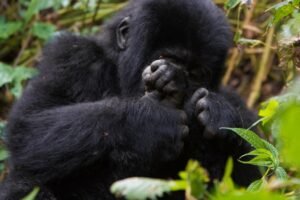
The Gorilla Habituation Experience is a conservation-based tourism activity that allows visitors to spend up to four hours observing a mountain gorilla family that is still being gradually introduced to human presence. Participants enter the forest with professional researchers, trackers, and ranger guides who monitor the family’s behavior, health, movement, feeding patterns, social structure, and responses to people.
Gorilla habituation is not a single event. It is a slow scientific process that may take several years. During this period, researchers visit a selected gorilla family regularly and calmly expose its members to the sight, sound, and smell of humans. The objective is not to domesticate the gorillas or change their natural behavior. Mountain gorillas remain completely wild. The goal is simply to reduce their fear of carefully managed human presence so that researchers, veterinarians, and eventually tourists can approach without causing excessive stress.
During the early stages of habituation, gorillas may retreat into thick vegetation, vocalize, charge, beat their chests, or show other defensive behaviors. Researchers respond by remaining calm, keeping an appropriate distance, avoiding sudden movement, and using familiar vocalizations to communicate peaceful intentions. Over time, repeated non-threatening encounters gradually help the gorillas understand that the research teams are not dangerous.
Visitors joining the Gorilla Habituation Experience are allowed to observe part of this ongoing process. They may witness researchers recording behavioral information, identifying individuals, examining feeding signs, studying nesting sites, monitoring infants, and evaluating how the gorillas react to human presence. This gives the activity a strong educational and scientific dimension that distinguishes it from standard gorilla trekking.
The extended four-hour observation period also allows participants to see a wider range of natural behavior. During one encounter, visitors may watch the gorillas feed, rest, groom, travel, communicate, care for infants, discipline juveniles, build social bonds, and interact with the surrounding forest. The experience creates a much deeper understanding of mountain gorilla family life than is usually possible during a shorter visit.
At Kyooma Gorilla Safaris, we describe Gorilla Habituation as a journey into the social world of mountain gorillas. It is not simply about seeing a gorilla and taking photographs. It is about understanding the patience, science, community participation, and conservation investment required to protect these endangered primates.
Understanding Gorilla Habituation from Start to Finish
Selecting a Gorilla Family
The Gorilla Habituation process begins when conservation authorities identify a suitable wild gorilla family. Not every family is selected. Researchers consider the group’s location, size, stability, health, movement patterns, relationship with neighboring gorilla groups, and the suitability of its home range for long-term monitoring.
A family led by a stable and confident silverback may respond differently from a group experiencing leadership changes or social tension. Because the dominant silverback plays a major role in determining how the family responds to danger, his reaction is particularly important. If he gradually accepts the presence of researchers, other family members are more likely to become comfortable as well.
The selected gorilla family is then monitored by experienced teams who begin visiting it regularly. These visits may initially be conducted from a considerable distance because the gorillas are still highly cautious and may disappear into dense forest whenever people approach.
Building Trust with Wild Gorillas
Trust is built gradually through consistency. Researchers enter the forest repeatedly, approach calmly, avoid aggressive body language, maintain appropriate distances, and use recognizable vocal signals. The same teams may visit frequently so that the gorillas become familiar with their voices, smell, movements, and general behavior.
Researchers never offer food, touch the gorillas, or attempt to control them. Habituation depends entirely on patience and respectful observation. The gorillas must be allowed to make their own decisions and move freely through the forest.
During each visit, researchers record how close they were able to approach, how long the gorillas remained visible, which individuals showed curiosity or fear, whether the silverback displayed aggression, and how quickly the group returned to normal behavior. These observations help conservation teams determine whether the family is becoming more tolerant.
Daily Research and Monitoring
Habituation involves much more than simply sitting near gorillas. Researchers study nesting behavior, feeding preferences, movement routes, vocal communication, family relationships, reproduction, infant survival, illness, injury, and changes in group composition.
Mountain gorillas build fresh nests every evening, and these nesting locations provide valuable information. By examining abandoned nests, trackers can determine where the family slept, estimate the group’s direction of travel, identify signs of feeding, and begin following the trail.
Researchers also identify individual gorillas using facial features, body size, scars, nose patterns, behavior, and family relationships. Every gorilla is given a name, and detailed records are kept throughout its life.
When a Gorilla Family Becomes Ready
A family is not declared fully habituated simply because it allows people to approach once or twice. Researchers must observe consistent tolerance over time. The gorillas should be able to continue feeding, grooming, resting, playing, and moving naturally while trained people remain nearby.
The process may take between two and five years, although each family responds differently. Some groups become comfortable relatively quickly, while others require much more time. Social changes, leadership disputes, births, deaths, interactions with unhabituated gorillas, and changes in habitat can influence the timeline.
Even after a family becomes available for regular tourism, monitoring continues. Habituation is maintained through careful daily management, restricted visitor numbers, health regulations, controlled observation times, and strict conservation rules.
How Gorilla Habituation Differs from Gorilla Trekking
Time Spent with the Gorillas
The most widely recognized difference between Gorilla Habituation and standard Gorilla Trekking is the amount of time spent with the gorillas. Ordinary gorilla trekking generally allows visitors to remain with a fully habituated gorilla family for one hour. Gorilla Habituation allows participants to spend up to four hours with a family undergoing the habituation process.
Those additional three hours completely change the character of the encounter. During a one-hour trek, visitors may feel pressure to take photographs and absorb the experience quickly. During Gorilla Habituation, there is more time to relax, observe changing behavior, listen to researchers, adjust camera settings, and watch the family move between feeding and resting areas.
Fully Habituated and Semi-Habituated Families
Standard Gorilla Trekking visits fully habituated families that are accustomed to regulated tourist groups. Gorilla Habituation involves families that are still becoming familiar with human observers.
Semi-habituated gorillas may be more cautious and unpredictable. They may remain partially hidden, move more frequently, or show greater interest in the visitors. This does not make the experience unsafe when managed by professionals, but it does make the encounter feel more exploratory and scientifically significant.
Number of Visitors
Gorilla Habituation groups are usually much smaller than standard trekking groups. Only a limited number of participants are allowed to join each habituation team. This creates a quiet, exclusive atmosphere and reduces the pressure placed on the gorilla family.
A smaller group also provides more space for photography, clearer communication with researchers, and a more personalized learning experience.
Research and Conservation Involvement
Traditional Gorilla Trekking is primarily a regulated wildlife tourism activity, although permit revenue supports conservation. Gorilla Habituation places visitors closer to the scientific process. Participants may accompany researchers who are actively collecting information about gorilla behavior, health, movement, and tolerance of people.
This research element gives the experience a stronger educational focus. Visitors do not become researchers themselves, but they witness how field science contributes to conservation decisions.
Photography Opportunities
Four hours provide significantly greater photographic potential than one hour. Light conditions change constantly beneath Bwindi’s forest canopy, and gorillas frequently move between open and heavily shaded areas. During the extended experience, photographers can wait patiently for better light, clearer backgrounds, eye contact, family interactions, and interesting behavior.
Physical Demands
Gorilla Habituation may be more physically demanding because the experience lasts longer and participants may follow the family through the forest after locating it. The entire excursion can occupy most of the day.
Traditional trekking may be more suitable for visitors with limited time, tighter budgets, or concerns about physical endurance. Gorilla Habituation is better suited to travelers who want a deeper, longer, and more conservation-focused encounter.
Which Experience Is Right for You?
Choose Gorilla Trekking when you want a shorter and generally more affordable encounter with a fully habituated family. Choose Gorilla Habituation when you want additional time, smaller groups, stronger research involvement, better photography potential, and a more immersive understanding of gorilla behavior.
Kyooma Gorilla Safaris can also arrange itineraries combining both experiences, allowing travelers to compare a fully habituated family with one still undergoing habituation.
Where Does Gorilla Habituation Experience Take Place?
The Gorilla Habituation Experience takes place in Uganda’s Bwindi Impenetrable National Park, one of Africa’s oldest, most biologically diverse, and most important tropical forests. Bwindi lies in southwestern Uganda near the borders with Rwanda and the Democratic Republic of Congo.
The park protects a remarkable landscape of steep ridges, deep valleys, tangled vines, giant ferns, waterfalls, streams, and dense montane vegetation. It is recognized internationally for its exceptional biodiversity and its role in conserving mountain gorillas.
Bwindi Impenetrable National Park
Bwindi is often described as impenetrable because of its thick vegetation and rugged landscape. The word does not mean that visitors cannot enter the forest. Instead, it reflects the density of the undergrowth and the physical challenge of moving through areas without established trails.
The park is home to mountain gorillas as well as numerous other mammals, primates, birds, butterflies, reptiles, amphibians, and plant species. Black-and-white colobus monkeys, L’Hoest’s monkeys, blue monkeys, duikers, forest hogs, and many forest birds may be encountered during the trek.
The Rushaga Sector
Gorilla Habituation activities are associated with the southern part of Bwindi, especially the Rushaga area. Rushaga is known for its dramatic hills, beautiful forest views, comfortable lodges, and access to several gorilla groups.
The sector can be reached from Entebbe, Kampala, Kisoro, or Kigali. Its location makes it particularly convenient for travelers beginning or ending their safari in Rwanda.
Other Bwindi Sectors
Bwindi is divided into several trekking sectors, including Buhoma, Ruhija, Rushaga, and Nkuringo. These sectors provide access to different habituated gorilla families and accommodation areas.
It is important to reserve accommodation near the correct sector because the park entrances are separated by mountainous roads and considerable driving distances. Kyooma Gorilla Safaris matches each guest’s permit location with suitable accommodation to avoid unnecessary early morning transfers.
Why Gorilla Habituation Is Only Available in Uganda
Uganda’s Gorilla Habituation Experience exists because of the country’s long-term investment in primate research, community conservation, ranger training, habitat protection, and carefully managed tourism. The Uganda Wildlife Authority works with researchers, veterinarians, conservation organizations, guides, local communities, and tourism operators to protect mountain gorillas while generating sustainable funding from responsible travel.
The availability of suitable gorilla families, experienced field teams, extensive monitoring programs, and the protected habitat of Bwindi makes this specialized activity possible. The number of participants is deliberately kept low because conservation, rather than mass tourism, remains the central priority.
Uganda’s model allows a small number of visitors to gain insight into the habituation process while generating revenue for wildlife protection. This careful balance is one of the reasons the experience remains so rare.
The History of Gorilla Habituation
Mountain gorillas were once widely misunderstood and feared. Early descriptions often portrayed them as aggressive creatures, while hunting, habitat destruction, disease, conflict, and human pressure threatened their survival.
Scientific research gradually transformed global understanding of gorillas. Long-term observation demonstrated that they are intelligent, highly social primates with complex family relationships, recognizable personalities, sophisticated communication, strong emotional bonds, and gentle behavior when they do not feel threatened.
The pioneering work of primatologists, conservationists, rangers, and local communities contributed to the development of modern gorilla protection. Habituation made detailed scientific observation possible and later allowed carefully controlled tourism to generate funding for conservation.
Uganda developed its own research and tourism programs within Bwindi. As gorilla families became familiar with trained observers, tourism authorities introduced regulated trekking under strict rules. The Gorilla Habituation Experience later emerged as a specialized activity that allowed a limited number of visitors to accompany conservation teams during part of the ongoing process.
Today, mountain gorilla conservation is often considered one of Africa’s most encouraging wildlife recovery stories. Although the species remains threatened and requires constant protection, decades of research, veterinary intervention, tourism revenue, law enforcement, habitat management, and community participation have improved its prospects.
How Gorilla Families Become Habituated
The Importance of the Silverback
The dominant silverback is central to the safety and stability of a gorilla family. He makes many decisions about movement, protection, feeding areas, and responses to danger.
Researchers pay close attention to his behavior because other members often follow his lead. If he remains calm in the presence of observers, females and juveniles are more likely to continue their normal activities. If he becomes defensive, the research team may increase the distance or withdraw temporarily.
Recognizing Individual Personalities
Each gorilla reacts differently to human presence. Some juveniles may show curiosity, while certain adults remain cautious for much longer. Mothers with infants may be especially protective. Young males may display or approach out of curiosity.
Researchers learn these personalities over time and adapt their behavior accordingly. Habituation is therefore not a standardized process applied identically to every family. It is a flexible relationship built through observation and respect.
Health Protection
Because gorillas are closely related to humans, disease prevention is one of the most important parts of habituation and tourism. Researchers follow hygiene protocols, avoid entering the forest when sick, monitor the health of individual animals, and report signs of illness to veterinary teams.
Visitor regulations are equally important. People with contagious illnesses may be prevented from trekking, and participants must follow ranger instructions concerning distance, behavior, food, waste, and coughing.
How Long Habituation Takes
The complete process can last several years. Researchers continue until the family consistently tolerates controlled observation without abandoning normal behavior.
Even after tourism begins, the family remains monitored. Habituation does not remove the need for careful management. Every encounter must continue to protect the welfare of the gorillas.
The Four-Hour Gorilla Habituation Experience Explained
The defining feature of the Gorilla Habituation Experience is the opportunity to spend up to four hours with a semi-habituated mountain gorilla family. These four hours offer a level of immersion that cannot be achieved during a brief wildlife encounter.
The experience unfolds according to the gorillas’ natural routine. Nothing is staged. The gorillas choose where to feed, rest, travel, groom, and play. Visitors follow only when researchers and rangers determine that it is safe and appropriate.
Preparing Before Sunrise
Most Gorilla Habituation days begin early. Guests wake before sunrise, enjoy breakfast, check their equipment, and travel to the designated park briefing point.
Your Kyooma Gorilla Safaris driver-guide ensures that you arrive on time with your permit documentation, packed lunch, drinking water, rain gear, camera equipment, and other essentials.
The Morning Briefing
Uganda Wildlife Authority rangers provide a detailed briefing before the trek. They explain expected forest conditions, gorilla behavior, safety procedures, conservation regulations, health requirements, and what participants should do if a gorilla approaches.
The briefing also introduces the professionals who will accompany the group, which may include ranger guides, trackers, and researchers familiar with the specific gorilla family.
Entering the Ancient Forest
The trek begins as participants leave the park headquarters and enter Bwindi’s dense vegetation. The forest immediately engages every sense. Moist earth, moss-covered trees, tangled vines, bird calls, butterflies, distant primate sounds, and changing light create an atmosphere unlike any open savannah safari.
The route may follow established trails initially before trackers lead the group into thicker vegetation. Porters and guides help guests navigate muddy slopes, roots, streams, and uneven ground.
Tracking the Gorilla Family
Trackers search for clues such as fresh nests, broken stems, footprints, dung, feeding remains, and vocalizations. Experienced teams can interpret these signs and determine the direction in which the family has moved.
Because gorillas travel freely, the length of the search changes daily. Sometimes they are found relatively quickly. On other days, the trek requires several hours.
The First Encounter
The moment a gorilla first appears is often unforgettable. A dark shape moves behind leaves, a juvenile climbs through the branches, or the enormous silverback emerges from thick vegetation.
The group stops, lowers its voices, and follows the instructions of the researchers. Cameras are prepared without flash. The excitement gradually becomes quiet concentration as the visitors begin observing the family.
The First Hour: Introduction and Observation
During the first hour, participants become familiar with the family. Researchers identify the silverback, adult females, juveniles, infants, and younger males. They explain individual personalities, family relationships, recent births, leadership behavior, and the group’s current stage of habituation.
The gorillas may initially watch the visitors carefully before returning to their normal routine.
The Second Hour: Family Relationships
As the encounter continues, more subtle behavior may become visible. Mothers groom their infants, juveniles wrestle, adults communicate through soft vocalizations, and the silverback supervises the family.
Extended observation helps visitors recognize that gorilla society is structured, emotional, and highly cooperative.
The Third Hour: Following the Family
The gorillas may begin moving toward a new feeding area. When conditions permit, visitors follow at a controlled distance.
Watching an entire family travel through the forest reveals the physical ability of mountain gorillas. Adults move confidently across steep slopes, infants cling to their mothers, and juveniles climb through branches or play along the route.
The Fourth Hour: Deeper Appreciation
By the fourth hour, many visitors have stopped thinking only about photographs. The encounter becomes quieter and more reflective.
A mother may nurse an infant, two juveniles may rest together, or the silverback may sit calmly beneath the canopy. These ordinary moments often become the most powerful because they reveal how peaceful and relatable gorilla family life can be.
When the observation period ends, participants withdraw quietly and begin the return trek. The gorillas continue their day, undisturbed within the forest.
A Typical Gorilla Habituation Day
A typical day begins early with breakfast and a transfer to the park headquarters. Following registration and briefing, visitors meet their guides, trackers, researchers, and optional porters.
The forest trek begins in the morning and may last from a short period to several hours depending on the location of the gorilla family. The route can cross steep slopes, dense vegetation, muddy ground, and narrow trails.
Once the gorillas are located and researchers determine that observation can begin, the four-hour period starts. Visitors watch the family while researchers explain behavior and record information.
After the encounter, the group returns through the forest. The total excursion often takes most of the day. Guests then return to their lodge to rest, enjoy a meal, review photographs, and reflect on the experience.
Why Gorilla Habituation Experience Is Worth Every Dollar
The Gorilla Habituation Experience is a premium wildlife activity, and many travelers naturally ask whether it is worth the cost. For those seeking an intimate, educational, and conservation-focused encounter, the value is exceptional.
The experience offers four times the observation period of ordinary gorilla trekking. This additional time allows visitors to move beyond the initial excitement and develop a deeper appreciation for individual gorillas, family relationships, and the research process.
Only a very limited number of participants are accepted each day. This exclusivity reduces crowding and creates a more personal encounter.
For photographers, the value is especially clear. Four hours increase the chance of seeing different behaviors, improved light, open views, eye contact, playful juveniles, and interactions between mothers and infants.
Permit revenue also supports ranger patrols, wildlife monitoring, veterinary care, habitat protection, research, park management, and community programs. Visitors are not simply purchasing access to wildlife. They are helping fund the system that keeps the gorillas and their forest protected.
Many Kyooma Gorilla Safaris guests describe Gorilla Habituation as one of the most meaningful experiences of their lives. The permit may be expensive, but the combination of exclusivity, education, conservation impact, photography, and emotional connection makes it highly rewarding.
Who Should Choose Gorilla Habituation Experience?
Wildlife Photographers
Photographers benefit from extended time, smaller groups, changing light, and a greater variety of behavior. The experience is suitable for both professionals and enthusiastic amateurs.
Conservation Enthusiasts
Travelers interested in wildlife research, endangered species protection, veterinary intervention, community conservation, and rainforest ecology will find the experience highly educational.
Nature Lovers
Gorilla Habituation is ideal for people who enjoy watching animals patiently rather than rushing from one sighting to another.
Adventure Travelers
The physical challenge of trekking through Bwindi adds to the adventure. Visitors should be willing to walk across rugged and sometimes muddy terrain.
Repeat Gorilla Trekkers
Travelers who have already completed standard gorilla trekking often choose habituation for a deeper and more distinctive second experience.
Luxury Travelers
Gorilla Habituation can be combined with premium lodges, private transfers, domestic flights, personalized guides, and exclusive safari extensions.
Filmmakers and Researchers
Although special filming and research permissions may be required for professional projects, the regular experience still provides useful insight into field conservation and gorilla behavior.
Best Time for Gorilla Habituation Experience
Gorilla Habituation is available throughout the year because mountain gorillas do not migrate out of Bwindi. Every season offers a rewarding encounter, although weather conditions influence trail difficulty, photography, availability, and visitor numbers.
June to September
June, July, August, and September are among the most popular months because rainfall is often lower and trails may be easier to navigate. Demand for permits and accommodation is high, so early booking is recommended.
December to February
The period from December through February is another popular travel season. Conditions are often relatively dry, making it attractive for trekking and photography.
March to May
These months generally experience heavier rainfall. Trails can become muddy and physically demanding, but the forest is exceptionally green and visitor numbers may be lower.
October and November
October and November can bring frequent showers. Photographers may appreciate the rich colors, mist, and dramatic rainforest atmosphere.
Is There a Bad Time to Visit?
There is no completely bad month for Gorilla Habituation. Rain can fall at any time because Bwindi is a tropical rainforest, while dry periods can also occur during the wetter seasons.
The best time depends on your schedule, budget, fitness, permit availability, and preference for either drier trails or quieter travel periods.
Physical Fitness Requirements
Gorilla Habituation requires reasonable physical fitness, but participants do not need to be professional athletes. The main challenge is the uncertainty of the trek. The gorillas may be near the starting point or several hours away.
The terrain includes steep slopes, slippery paths, tangled vegetation, roots, streams, and muddy ground. After finding the family, visitors may continue moving through the forest during the four-hour observation period.
Regular walking, hiking, cycling, swimming, or other aerobic exercise before the safari can improve comfort. Travelers should begin preparing several weeks before departure whenever possible.
Should You Hire a Porter?
Hiring a porter is strongly recommended. Porters carry backpacks, help visitors across difficult sections, and provide support on steep or slippery ground.
Using a porter also supports local livelihoods. Many porters live in communities surrounding Bwindi and depend on tourism income.
What Happens if You Walk Slowly?
The trek is not a race. Rangers normally adjust the pace to the group and allow rest stops. However, participants should be honest about their health and mobility when planning the experience.
Kyooma Gorilla Safaris can provide preparation advice and recommend itinerary arrangements that reduce unnecessary fatigue.
What to Pack for Gorilla Habituation Experience
Proper packing is essential because the experience may involve a full day in changing rainforest conditions.
Waterproof Hiking Boots
Wear sturdy waterproof boots with strong grip and ankle support. Trails may be muddy, steep, rocky, or covered with roots. Break in your boots before traveling.
Long Trousers
Long trousers protect against stinging nettles, insects, thorns, and scratches. Lightweight, quick-drying materials are ideal.
Long-Sleeved Shirt
A breathable long-sleeved shirt protects the arms from vegetation, insects, and cool morning temperatures.
Waterproof Rain Jacket
Rain can occur in any month. Carry a lightweight waterproof jacket with a hood.
Gardening or Hiking Gloves
Gloves protect your hands when holding vegetation for support on steep or slippery sections.
Daypack
Use a comfortable backpack for water, snacks, rain gear, cameras, medication, and personal items. A waterproof cover or dry bag is helpful.
Drinking Water
Carry sufficient water for a long day. Your lodge or Kyooma Gorilla Safaris guide can help prepare the recommended amount.
Packed Lunch and Snacks
The experience may last most of the day. Lodges usually prepare a packed lunch, while energy bars, nuts, or dried fruit can provide additional energy.
Insect Repellent
Use insect repellent to reduce bites from mosquitoes and other forest insects.
Gaiters
Gaiters are optional but useful for keeping mud, water, and insects out of your boots.
Camera Equipment
Bring your camera, suitable lenses, extra batteries, memory cards, lens cloths, and waterproof protection.
Personal Medication
Carry all necessary prescriptions and a small personal first-aid kit.
Travel Documents
Protect your passport, permit confirmation, insurance information, and other important documents in a waterproof pouch.
Photography Tips for Gorilla Habituation
Photographing mountain gorillas can be challenging because of low light, dense vegetation, movement, humidity, and changing distances. The extended observation period gives photographers time to adapt.
Do Not Use Flash
Flash photography is prohibited because it may disturb the gorillas. Turn off automatic flash before entering the viewing area.
Use a Fast Shutter Speed
Gorillas may move suddenly, particularly juveniles. A sufficiently fast shutter speed helps reduce motion blur.
Increase ISO When Necessary
The forest canopy limits light. Modern cameras can often produce good results at higher ISO settings.
Choose a Flexible Lens
A 70–200mm lens is useful in many situations, while longer lenses provide additional flexibility when gorillas remain farther away. A shorter lens can capture environmental portraits showing the forest around the animal.
Protect Your Equipment
Use waterproof covers, sealed bags, and lens cloths. Rain and humidity can affect cameras quickly.
Focus on the Eyes
Eye contact often creates powerful portraits. Use single-point or animal-eye autofocus when your camera supports it.
Photograph Behavior
Do not focus only on close portraits. Capture grooming, feeding, play, movement, maternal care, interaction, and the surrounding environment.
Put the Camera Down Occasionally
Some of the most meaningful moments are best experienced directly. Take time to watch without looking continuously through the camera.
Gorilla Habituation Rules and Regulations
The regulations are designed to protect both gorillas and visitors. Every participant must follow the instructions of the ranger guides and researchers.
Do Not Trek When Sick
Visitors with contagious illnesses may be prevented from participating. Respiratory infections can be dangerous to gorillas.
Maintain the Required Distance
Stay at the distance specified by the rangers. If a gorilla approaches, remain calm and follow instructions.
Never Touch a Gorilla
Gorillas remain wild animals. Touching increases the risk of disease transmission and may provoke an unpredictable response.
Keep Voices Low
Speak quietly and avoid shouting, sudden movements, or unnecessary noise.
Do Not Eat Near the Gorillas
Food and drink should not be consumed within the viewing area.
Do Not Litter
Carry all waste out of the forest. The habitat must remain clean and undisturbed.
Do Not Use Flash
Disable the flash on cameras and phones before photography begins.
Follow Coughing and Sneezing Guidance
Turn away from the gorillas and cover your nose and mouth as directed by the rangers.
Respect the Time Limit
The observation period is controlled by conservation authorities. Visitors must leave when instructed.
Gorilla Habituation Permit Cost
A Gorilla Habituation permit grants access to the forest, the ranger briefing, professional guidance, tracking services, conservation management, and up to four hours with the selected family after it is located.
Permit rates are established by the Uganda Wildlife Authority and may be revised. Rates may also differ according to visitor category. Travelers should confirm the official price when planning their safari rather than relying on outdated online information.
Because only a few permits are available each day, advance booking is essential. Peak-season dates can sell out many months ahead.
At Kyooma Gorilla Safaris, we check availability, explain the applicable permit rate, secure permits after payment, and build the remaining itinerary around the confirmed trekking date.
How to Book Gorilla Habituation Experience
Choose Your Travel Dates
Begin by selecting your preferred month and several possible dates. Flexibility increases the chance of finding available permits.
Contact Kyooma Gorilla Safaris
Send us your preferred dates, number of travelers, accommodation level, arrival point, number of safari days, and any additional activities you wish to include.
Check Permit Availability
Our team verifies availability before finalizing the itinerary. Because permits are limited, checking availability should come before making non-refundable accommodation or flight arrangements.
Pay for the Permit
Permits are normally secured after the required payment is received. A verbal request or draft itinerary does not guarantee availability.
Confirm Accommodation and Transport
After the permit is secured, Kyooma Gorilla Safaris arranges suitable accommodation, airport transfers, road transportation, domestic flights, meals, and other safari activities.
Receive Pre-Departure Information
Before arrival, guests receive guidance concerning packing, visas, travel insurance, health preparation, currency, weather, tipping, photography, and trekking regulations.
Best Accommodation for Gorilla Habituation Experience
Accommodation should be selected according to the sector shown on the permit. Staying near the correct briefing point reduces early morning driving and lowers the risk of arriving late.
Luxury Accommodation
Luxury lodges may offer spacious cottages, private verandas, forest views, fireplaces, fine dining, spa treatments, personalized service, and premium facilities.
These properties are suitable for honeymooners, photographers, luxury travelers, and guests who want maximum comfort after a physically demanding day.
Mid-Range Accommodation
Mid-range lodges provide private rooms, hot showers, good meals, comfortable beds, welcoming service, and convenient locations at a moderate price.
This category is popular with couples, solo travelers, families, and small groups.
Budget Accommodation
Budget guesthouses, camps, and community lodges provide simple but comfortable facilities. They are ideal for travelers prioritizing the gorilla experience over luxury.
How Kyooma Gorilla Safaris Selects Lodges
We consider permit location, budget, road access, guest reviews, meal quality, room standards, customer service, sustainability, and the overall itinerary before recommending accommodation.
How to Get to Bwindi Impenetrable National Park
Traveling from Entebbe or Kampala by Road
The drive from Entebbe or Kampala to southern Bwindi usually takes most of the day. The route passes through towns, farmland, hills, and rural landscapes.
A road journey can be divided with an overnight stay or combined with attractions such as Lake Mburo National Park, Queen Elizabeth National Park, or the Equator.
Flying to Bwindi
Domestic flights operate from Entebbe to airstrips serving southwestern Uganda. Travelers continue by road from the airstrip to their lodge.
Flying reduces travel time and is especially convenient for luxury travelers or visitors with limited days.
Traveling from Kigali
Kigali is a popular entry point because of its proximity to southern Bwindi. Travelers drive through Rwanda, complete border formalities, and continue into Uganda.
This route works well for short Gorilla Habituation itineraries, provided visa, entry, and border requirements are confirmed before travel.
Combining Uganda and Rwanda
Kyooma Gorilla Safaris can organize cross-border itineraries combining Bwindi with Kigali, Volcanoes National Park, Lake Kivu, cultural attractions, or other destinations.
Sample Gorilla Habituation Safari Itineraries
Two-Day Gorilla Habituation Safari from Kigali
Day one begins with collection from Kigali, followed by a scenic drive across the border into Uganda and onward to a lodge near Rushaga. Day two begins early with the Gorilla Habituation Experience, followed by the return journey according to the guest’s schedule.
This itinerary is suitable for travelers with very limited time, although the second day can be long.
Three-Day Gorilla Habituation Safari
Day one includes travel to Bwindi and lodge check-in. Day two is dedicated to the Gorilla Habituation Experience. Day three includes the return journey or transfer to another destination.
This is one of the most comfortable short itineraries.
Four-Day Gorilla Habituation and Lake Bunyonyi Safari
The itinerary combines Gorilla Habituation with relaxation at Lake Bunyonyi. Travelers can enjoy canoeing, scenic viewpoints, island visits, birdwatching, or peaceful lodge time.
Five-Day Gorilla Habituation and Queen Elizabeth Wildlife Safari
This safari combines the rainforest experience with game drives and a boat cruise in Queen Elizabeth National Park. It offers opportunities to see elephants, buffaloes, hippos, crocodiles, antelopes, lions, and many bird species.
Seven-Day Uganda Primate Safari
A longer itinerary can combine Gorilla Habituation with chimpanzee tracking in Kibale National Park, wildlife viewing in Queen Elizabeth National Park, and scenic travel through western Uganda.
Extended Uganda Safari
Travelers with more time can add Murchison Falls National Park, Lake Mburo National Park, the source of the Nile, golden monkey tracking, birding, cultural activities, and additional gorilla trekking.
Kyooma Gorilla Safaris customizes every itinerary rather than forcing guests into a fixed schedule.
Conservation Impact of Gorilla Habituation
Gorilla Habituation is important because it generates funding, knowledge, awareness, and community benefits that strengthen long-term conservation.
Funding Wildlife Protection
Permit revenue contributes to ranger salaries, patrols, monitoring, veterinary response, habitat management, research, tourism infrastructure, and park administration.
Supporting Scientific Research
Researchers collect information about births, deaths, health, movement, diet, reproduction, group changes, social relationships, and human impact. This data improves conservation decisions.
Protecting Gorilla Habitat
Mountain gorillas cannot survive without intact forest. Tourism revenue increases the economic value of preserving Bwindi and helps justify continued investment in habitat protection.
Supporting Local Communities
Tourism creates work for guides, porters, drivers, lodge employees, farmers, craftspeople, cultural performers, and suppliers. Community projects may also benefit from conservation revenue and tourism partnerships.
Encouraging Positive Attitudes Toward Conservation
When communities receive tangible benefits from tourism, wildlife protection becomes more valuable locally. This reduces pressure on the forest and strengthens cooperation between communities and park authorities.
Raising International Awareness
Visitors frequently return home as advocates for mountain gorillas. They share photographs, support conservation organizations, recommend responsible tourism, and educate others about the importance of protecting endangered species.
Why Choose Kyooma Gorilla Safaris?
Planning a Gorilla Habituation safari involves much more than securing a permit. Travelers must coordinate dates, transportation, accommodation, park sectors, border requirements, flights, meals, guides, and optional extensions.
Kyooma Gorilla Safaris provides local expertise and personalized support throughout the planning process.
Permit Booking Assistance
We verify availability, explain the booking process, reserve permits, and organize the itinerary around the confirmed date.
Experienced Local Driver-Guides
Our guides understand Uganda’s roads, parks, wildlife, culture, communities, weather, and travel conditions. They provide practical assistance and local insight throughout the safari.
Tailor-Made Itineraries
We design safaris according to your budget, preferred accommodation, available time, fitness, interests, and arrival point.
Accommodation Selection
We recommend lodges near the correct trekking sector and match each property to the traveler’s preferred comfort level.
Airport and Cross-Border Transfers
We organize transfers from Entebbe, Kampala, Kigali, domestic airstrips, hotels, and other destinations.
Responsible Tourism
Kyooma Gorilla Safaris promotes respectful wildlife encounters, local employment, community participation, environmental awareness, and responsible travel practices.
Personal Support
From your first inquiry to the final day of the safari, our team remains available to answer questions and manage practical arrangements.
Frequently Asked Questions About Gorilla Habituation Experience
What Is Gorilla Habituation Experience?
Gorilla Habituation Experience is a conservation-focused activity that allows visitors to spend up to four hours with a semi-habituated mountain gorilla family while accompanying researchers, trackers, and ranger guides.
Where Does Gorilla Habituation Take Place?
It takes place in Uganda’s Bwindi Impenetrable National Park, particularly in the southern region associated with the Rushaga sector.
How Is Gorilla Habituation Different from Gorilla Trekking?
Gorilla Habituation offers up to four hours with semi-habituated gorillas, while standard trekking generally offers one hour with a fully habituated family.
How Long Does the Entire Experience Take?
The activity may occupy most of the day. The total duration includes briefing, hiking, searching for the family, four hours of observation, and the return walk.
When Does the Four-Hour Period Begin?
The observation period begins when the gorilla family is located and researchers confirm that close observation can start.
How Many People Are Allowed?
Only a very small number of visitors are allowed in each habituation group, creating an exclusive experience and reducing pressure on the gorillas.
Is Gorilla Habituation Worth It?
It is especially worthwhile for photographers, conservation enthusiasts, repeat gorilla trekkers, and travelers who want a deeper encounter.
Is Gorilla Habituation Safe?
Yes, when participants follow ranger instructions. Experienced professionals monitor the gorillas and manage every encounter.
Are the Gorillas Dangerous?
Mountain gorillas are powerful wild animals, but they are generally calm when they do not feel threatened. Visitors must respect their space and follow all instructions.
Can Gorillas Approach Visitors?
A curious gorilla may occasionally move closer. Visitors should remain still and follow the directions of the ranger guide.
Can I Touch a Gorilla?
No. Touching gorillas is prohibited because of disease risk, animal welfare, and visitor safety.
Can I Use Flash Photography?
No. Flash photography is not permitted.
Can I Take Videos?
Personal video recording is generally possible when conducted quietly and according to park rules. Professional filming may require additional authorization.
Can I Use a Drone?
Drone use is restricted in protected areas and normally requires special authorization.
What Is the Minimum Age?
The Uganda Wildlife Authority sets the minimum participation age. Confirm the current rule before booking.
Can Families Join the Experience?
Families can participate when all members meet the age, health, and fitness requirements.
What Happens if I Am Sick?
Visitors with contagious symptoms may be prevented from trekking to protect the gorillas.
Do I Need to Be Very Fit?
You need reasonable fitness and the ability to walk for several hours over uneven terrain.
How Can I Prepare Physically?
Regular walking, hiking, cycling, swimming, and stair climbing can improve endurance before the safari.
Should I Hire a Porter?
Yes. A porter can carry your bag, assist on difficult terrain, and help you conserve energy.
What Should I Wear?
Wear waterproof hiking boots, long trousers, a long-sleeved shirt, rain protection, and suitable outdoor clothing.
Should I Wear Neutral Colors?
Neutral shades are recommended because they are practical for wildlife activities and blend naturally with the environment.
Do I Need Gloves?
Gardening or hiking gloves are useful for protecting your hands from vegetation and improving grip.
How Much Water Should I Carry?
Carry enough water for a potentially long day. Your operator or lodge can advise you based on current conditions.
Is Lunch Provided?
Most safari arrangements include a packed lunch prepared by the lodge. Confirm inclusions before departure.
What Camera Is Best?
Any camera you can operate confidently is suitable. Cameras with strong low-light performance and flexible lenses can produce excellent results.
What Lens Should I Bring?
A medium telephoto zoom such as 70–200mm is versatile. Longer lenses may be useful, while shorter lenses capture environmental scenes.
Will I Definitely See Gorillas?
Sightings are highly successful because trackers monitor the family, but wildlife encounters can never be guaranteed absolutely.
What Happens if It Rains?
The trek normally continues unless park authorities determine that conditions are unsafe. Rain gear is essential.
Can Gorilla Habituation Be Done All Year?
Yes. The experience is available throughout the year, subject to permit availability and park management.
What Is the Best Month?
The most suitable month depends on your preferred weather, permit availability, budget, and tolerance for muddy conditions.
How Far in Advance Should I Book?
Book several months ahead, especially during popular travel periods. Highly restricted availability makes early planning important.
Can I Book at the Last Minute?
Last-minute permits may occasionally be available, but relying on this is risky.
How Do I Book a Permit?
You can book through a licensed tour operator such as Kyooma Gorilla Safaris, which can verify availability and secure the permit on your behalf.
Can the Permit Be Transferred?
Permit amendment and transfer rules are determined by the relevant authorities. Confirm the applicable conditions before making payment.
Is the Permit Refundable?
Cancellation and refund conditions depend on official regulations and the timing of the cancellation. Review the terms before booking.
What Does the Permit Include?
The permit generally covers entry for the Gorilla Habituation activity, ranger guidance, tracking, conservation management, and the authorized observation period. It does not normally include accommodation, private transport, visas, or personal expenses unless included in a safari package.
Where Should I Stay?
Stay near the sector indicated on your permit. Kyooma Gorilla Safaris selects accommodation based on your trekking location and budget.
Can I Travel from Kigali?
Yes. Kigali is a convenient starting point for southern Bwindi, subject to border and visa requirements.
Can I Fly from Entebbe?
Yes. Domestic flights can shorten the journey, followed by a road transfer from the airstrip.
Can I Combine Habituation with Gorilla Trekking?
Yes. Combining both experiences provides an excellent comparison between semi-habituated and fully habituated families.
Can I Combine It with Chimpanzee Trekking?
Yes. Kibale National Park is a popular addition for travelers interested in primates.
Can I Add a Wildlife Safari?
Yes. Queen Elizabeth National Park, Lake Mburo National Park, and Murchison Falls National Park can be incorporated into a longer itinerary.
Is Travel Insurance Necessary?
Comprehensive travel insurance is strongly recommended. It should cover medical emergencies, cancellation, evacuation, delays, and activities included in your itinerary.
Is Gorilla Habituation Suitable for Solo Travelers?
Yes. Solo travelers can join the permitted group while enjoying private transport or a customized safari itinerary.
Is It Suitable for Honeymooners?
Yes. The experience can be combined with luxury lodges, private transfers, scenic flights, and romantic safari extensions.
Why Book with Kyooma Gorilla Safaris?
Kyooma Gorilla Safaris provides local knowledge, permit assistance, tailored itineraries, accommodation recommendations, experienced guides, transport arrangements, and complete safari support.
Conclusion;
The Gorilla Habituation Experience is far more than a wildlife excursion. It is a rare journey into the heart of mountain gorilla conservation, a chance to observe one of humanity’s closest relatives in its natural habitat, and an opportunity to understand the patience and dedication required to protect an endangered species.
Spending up to four hours with a semi-habituated gorilla family allows visitors to move beyond the excitement of the first sighting. Over time, individual personalities become recognizable. The commanding silverback is no longer simply an impressive animal but a leader responsible for the safety of his family. Adult females become devoted mothers and experienced caregivers. Juveniles reveal curiosity, energy, and playful intelligence. Infants display the vulnerability that makes long-term conservation so important.
The surrounding forest also becomes part of the story. Bwindi Impenetrable National Park is not merely a backdrop for gorilla tourism. It is an ancient ecosystem supporting countless plants, birds, mammals, insects, reptiles, and amphibians. Protecting the gorillas therefore means protecting the wider rainforest and the ecological relationships that sustain life within it.
Every Gorilla Habituation permit contributes to this protection. The revenue supports ranger patrols, scientific monitoring, veterinary care, habitat management, tourism infrastructure, and community development. Local guides, trackers, porters, drivers, lodge employees, farmers, artisans, and other community members also benefit from responsible tourism.
For photographers, the four-hour encounter creates opportunities to capture behavior, emotion, interaction, and the atmosphere of the rainforest. For conservation enthusiasts, it offers insight into field research and wildlife management. For adventure travelers, the trek provides a physical and emotional challenge. For every visitor, it offers memories that are difficult to compare with any other safari activity.
Planning the experience correctly is essential. Permits are limited, accommodation must match the correct trekking sector, weather can change quickly, and the journey to Bwindi requires careful coordination. Working with an experienced local operator removes much of this complexity.
Kyooma Gorilla Safaris is ready to assist with every stage of your Gorilla Habituation safari. We check permit availability, secure reservations, organize accommodation, arrange road or air transfers, provide experienced driver-guides, and combine the experience with Uganda’s other remarkable wildlife and cultural destinations.
Whether you are planning a short Gorilla Habituation safari from Kigali, a three-day journey from Entebbe, a photography-focused expedition, a luxury honeymoon, or a complete Uganda primate and wildlife adventure, we create an itinerary designed around your interests.
The mountain gorillas of Bwindi live within one of the world’s most extraordinary forests. Meeting them is a privilege. Spending four hours learning about their lives is an experience that can change the way you understand wildlife, conservation, and the natural world.
Begin planning your Gorilla Habituation Experience with Kyooma Gorilla Safaris. Contact our team to check permit availability, explore suitable travel dates, choose your preferred accommodation, and create a personalized Uganda safari that you will remember for the rest of your life.